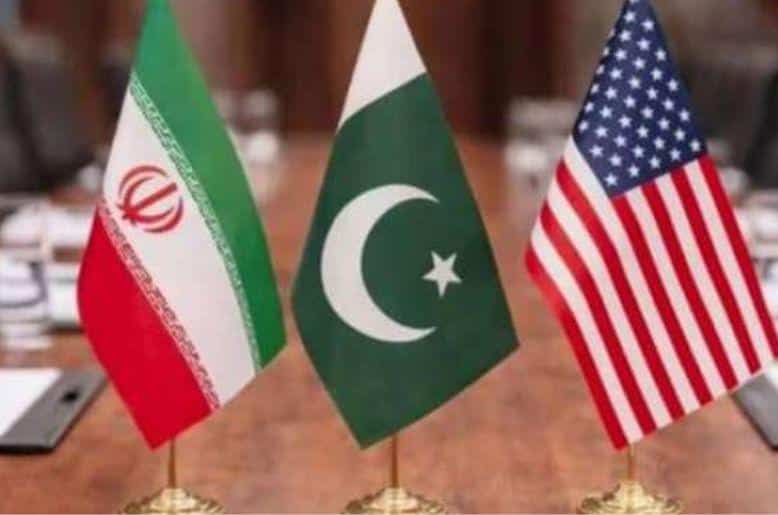
In a display of sophisticated shuttle diplomacy, Islamabad has mediated a ten-point peace framework between the Trump administration and Tehran, proving that the cost of peace is always a fraction of the price of total war.
History is not merely a collection of events; it is a chronicle of human resolve of nations that, when standing on the brink of destruction, find a path towards survival.
The morning of 6 and 7 April 2026, which emerged on the global horizon shrouded in foreboding, was perilously close to becoming a dark stain on the conscience of human civilisation. It was a moment when humanity seemed to hold its breath, the air was heavy with the scent of gunpowder, and the corridors of power echoed with calls for retribution.
US President Donald Trump’s threat to bring about the end of Iranian civilisation was not merely a political statement but a manifestation of the human ego willing to reduce centuries of cultural achievement to ashes within hours.
At this critical juncture, as the deserts of the Middle East glowed with the fire of missiles and the waters of the Strait of Hormuz threatened to choke the pulse of the global economy, a beacon of hope emerged from Islamabad. It demonstrated that the ink of diplomacy and the light of wisdom are far more powerful than the smoke of gunpowder.
It became evident that the balance of power is fundamental to the stability of the international system. Pakistan’s foreign policy has long been distinguished by its principle of equilibrium, where competing interests converge.
On one side stood decades of security partnership with Washington, and on the other, deep-rooted fraternal, cultural, and spiritual ties with Tehran, relationships resilient to the tempests of history.
This dual trust enabled Pakistan to evolve into a credible channel of mediation, whose significance cannot be measured in material terms.
It provided a pathway through which two adversarial states could move closer, confident that the voice emanating from Islamabad carried sincerity of intent and a genuine yearning for peace.
In this moment, Pakistan chose the path of the greater good, prioritising global stability over narrow national interests.
Opening the door to dialogue between nations poised for confrontation is nothing short of extraordinary.
The foresight of Pakistan’s leadership, particularly Field Marshal Syed Asim Munir, was instrumental in the shuttle diplomacy that unfolded during the crisis, earning admiration from international observers.
Facilitating direct communication between J.D. Vance in Washington and Abbas Araghchi in Tehran was akin to a cool breeze passing between two raging volcanoes.
This endeavour was not merely political manoeuvring but an exercise in resolving deep-seated psychological tensions.
It reaffirmed that when a state positions itself within a framework of balance and respects the sovereignty and national dignity of all parties, it naturally earns recognition as an impartial arbiter. As the ancient adage suggests, “The true hero is not the one who wields the sword, but the one who stops it.”
A glance at history reveals that during the 1970s, Pakistan played a pivotal role as a secret bridge between the United States and China, an initiative that reshaped global geopolitics. In 2026, history appeared to echo this legacy, albeit on a far grander and more perilous scale.
This time, the stakes extended beyond bilateral relations to encompass the security of the Strait of Hormuz, through which more than 20 per cent of the world’s oil supply flows, and the ominous spectre of nuclear confrontation.
Contemporary Pakistan has demonstrated that it is not merely the geographical heart of South Asia but also a wellspring of strategic wisdom and diplomatic influence, with reverberations felt in Washington, Beijing, and Tehran alike.
This episode represents a golden chapter in Pakistan’s diplomatic history, offering future generations a timeless lesson: the cost of peace is always far less than the price of war.
The ten-point peace framework that emerged from Pakistan’s mediation was not simply a procedural document but a new “Charter of Humanity.”
Crafted with a keen understanding of both psychological dynamics and geopolitical realities, it sought to address the concerns of all stakeholders.
Iran’s expressed willingness to forgo the pursuit of nuclear weapons signalled its commitment to reconciliation, while the recognition of its peaceful nuclear programme represented a logical and legitimate concession.
The lifting of primary and secondary economic sanctions was not merely an economic adjustment but a moral imperative, alleviating the hardships faced by the Iranian people.
Given that more than one-fifth of global oil supplies transit the Strait of Hormuz, its closure would have amounted to economic self-sabotage on a global scale.
Through astute diplomacy, Pakistan persuaded Tehran to reopen this vital maritime corridor within defined technical parameters, a decision that proved life-saving for industries across Asia and Europe.
On the other hand, Washington’s “maximum pressure” posture appeared uncompromising. Yet, the essence of diplomacy lies in transforming the seemingly impossible into the achievable.
Encouraging the Trump administration to return to the negotiating table was, in itself, a significant diplomatic achievement.
Iran’s decision to allocate revenues from transit fees towards reconstruction rather than military expansion marked the beginning of a new era, underscoring the principle that nations attain greatness not through warfare but through prosperity and stability.
This crisis served as a powerful reminder that the world is not merely a global village but rather akin to a single organism, pain in one part reverberates throughout the whole.
Islamabad’s successful diplomacy stands as a testament to the enduring truth that confrontation leads to devastation, whereas dialogue illuminates the path from darkness to hope.
The price Pakistan paid in this endeavour was measured not in material terms but in sleepless nights, relentless effort, and steadfast patience.
The reward, however, was the emergence of a world where commercial vessels now traverse waters once threatened by missiles. Pakistan’s achievement will be remembered in history as that of a “messenger of peace.”
As we reflect upon those perilous moments, it becomes evident how vulnerable humanity had become until a single step taken from Islamabad transformed despair into hope.
Pakistan’s diplomacy affirms the timeless truth that wars may conquer territories, but peace conquers hearts.
History bears witness that in times of profound global crises, only a few nations rise to safeguard humanity through strategic foresight and balanced policies.
Pakistan now stands prominently among them, having demonstrated that “an hour of peace outweighs a hundred years of war.”
The prospective Islamabad Accord of 2026 is therefore not merely a document but a covenant for the preservation of human civilisation, one that will guide advocates of peace for generations to come.
It symbolises the return of Pakistan’s greatness, a vision once cherished by its founders.
The world may increasingly recognise that the shaping of global destiny is no longer confined to Washington alone, but that Islamabad has emerged as a pivotal centre of diplomatic influence.