
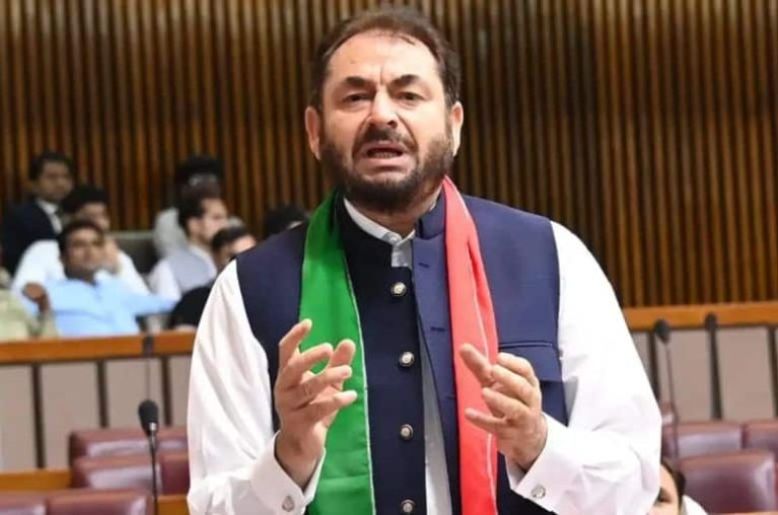
Close family sources have claimed that Pakistan Tehreek-e-Insaf (PTI) Member of the National Assembly Iqbal Afridi, who has faced allegations of delivering hard-line speeches against the federal government and inciting young people towards confrontation, went into hiding and crossed the border into Afghanistan. However, his alleged arrival in Afghanistan has not been independently confirmed.
Afridi’s reported disappearance has raised fresh questions about his political role and style of politics. His critics argue that a leader who has used strong language against the federal government at political rallies and urged young people to be prepared to fight, suffer injuries and even die must also be accountable for his own actions. They say the lack of clear information about his whereabouts has prompted serious questions.
Political opponents have strongly criticised the situation, arguing that leaders who push workers towards risky confrontations should also take responsibility for their own statements and political decisions.
According to critics, if the reports of Afridi’s alleged escape to Afghanistan prove accurate, the development would raise serious questions about a style of politics in which party workers are asked to make sacrifices while the whereabouts of their leadership remain uncertain.
Another significant development concerning Afridi came in September 2026, when an anti-terrorism court ordered the blocking of passports belonging to him and 23 other PTI lawmakers in connection with a case related to the November 26 protest.
Although the court’s order does not confirm the claim that Afridi fled to Afghanistan, it makes the reports about his alleged departure from Pakistan a matter requiring further scrutiny.
Confirmation from the relevant authorities regarding Afridi’s current location, the alleged border crossing and his reported arrival in Afghanistan is still awaited. His response to the claims is also not available.
If the allegations are substantiated, the reported development could intensify political debate over the apparent gap between Afridi’s public speeches and his own actions.
