
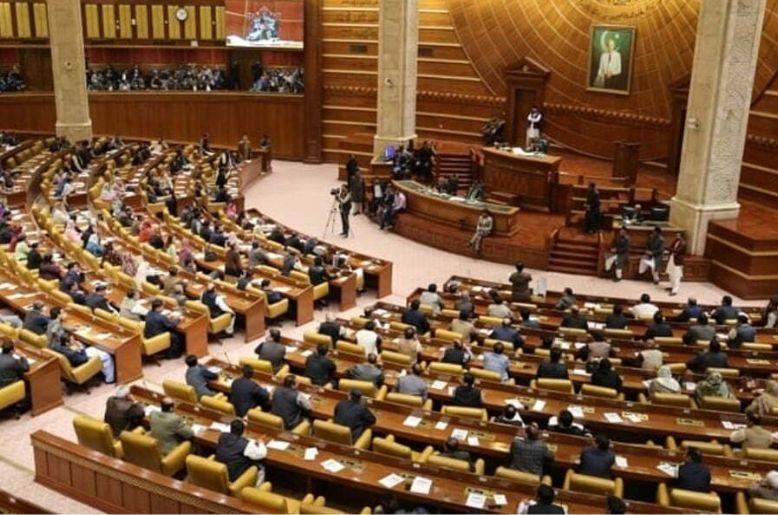
A high-level committee of the Punjab Assembly, on Monday, announced that a controversial colonial-era law that allows the police to arrest poor individuals should be repealed.
The Committee on Law Reforms and Delegated Legislation convened on Monday at the Punjab Assembly, presided over by Speaker Malik Muhammad Ahmad Khan, addressing important matters ranging from outdated criminal laws to police accountability.
A key focus of the meeting was the examination of Section 55(1)(b) of the Code of Criminal Procedure, 1898, which allows police to detain individuals without a warrant if they possess “no ostensible means of subsistence.”
The committee characterised this provision as an outdated colonial remnant that criminalises poverty rather than criminal behaviour, and it conflicts with essential constitutional rights.
The suggested reforms also recommend tightening another clause, Section 55(1)(c), which grants a station house officer the authority to arrest a suspect.
The committee proposed substituting ambiguous standards for arrests, such as the “repute” of a suspect, with objective criteria, including previous convictions within the last five years and reasonable grounds for believing a crime will be committed.
The committee observed that the current law violates several constitutional protections, including the rights to liberty, dignity, equality, and freedom of movement.
It also noted that previous court decisions have classified such arrests as abuses of power.
Punjab Assembly introduces bill to protect houses of minorities
In February, a new bill was presented in the Punjab Assembly to protect the collective properties of minority communities across the province.
Falbous Christopher, Chairman of the Punjab Assembly’s Standing Committee on Minority Affairs, moved the proposed law in the assembly.
Through this bill, the government aimed to form a strong Provincial Action Committee to protect and properly manage properties owned by minority communities across Punjab.
Read more: Punjab Assembly introduces bill to protect minority communities’ properties
