
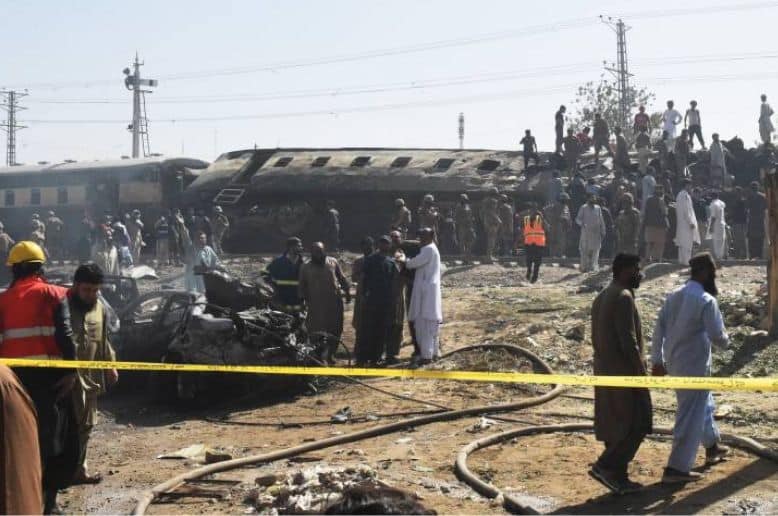
After the terrorist incident in Quetta, it emerged that the mastermind behind the attack was a “missing person,” once again raising serious questions about intellectuals who promote a one-sided narrative in the name of human rights on social media platforms.
Social media users viewed that the voices of Pakistani citizens who have been killed, as well as victims of terrorism, should be raised with the same intensity and frequency as voices on other issues.
Questions are also being raised at the public level that the concept of human rights should not be limited to a particular class or specific individuals; rather, its scope should be expanded to include the protection of all citizens, as well as the safeguarding of life and property.
Being a “missing person” cannot be considered absolute proof of an individual’s innocence. If a person is innocent, state institutions and the law are obligated to provide them with full protection. However, if there is evidence of someone’s involvement in terrorism or the killing of innocent citizens, accountability and legal action are also inevitable.
Meanwhile, the Government of Balochistan has strongly condemned the recent tragic and cowardly explosion near Chaman Phatak in the provincial capital, Quetta, and expressed deep sorrow, grief, and regret over the incident.
Special Assistant to the Chief Minister of Balochistan for Information, Shahid Rind, in an official statement issued on behalf of the provincial government, said that targeting innocent citizens in this act of terrorism was an extremely brutal act.
He stated in unequivocal terms that the terrorists backed by “Fitna al Hindustan attempting to sabotage law and order do not deserve any leniency and will be dealt with an iron hand.
He further said that, due to the close surveillance and timely action of security agencies near Chaman Phatak in Quetta, a major tragedy involving the Jaffar Express was averted.
