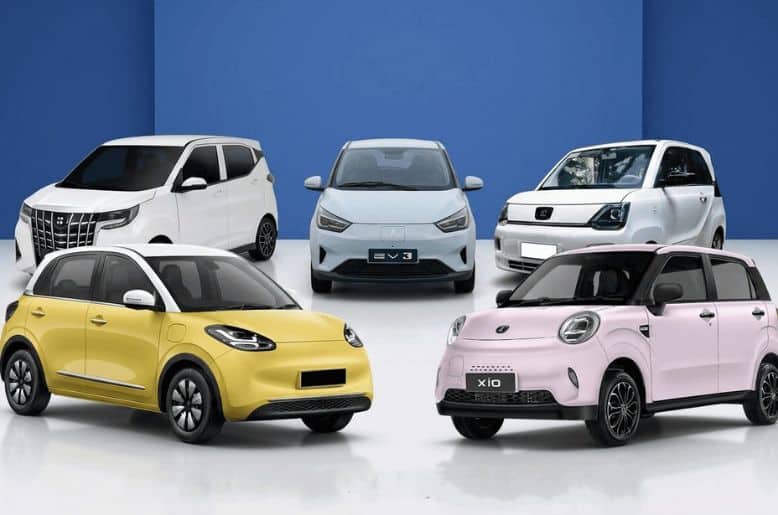
The federal government is likely to increase the sales tax on imported electric vehicles (EVs) to 25 per cent in the federal budget for fiscal year 2026-27, according to sources.
However, the existing tax rates for hybrid vehicles are expected to remain unchanged.
Sources said several tax incentives and exemptions available to the EV sector will expire on June 30, 2026. These include the sales tax exemption granted on the import of Completely Knocked Down (CKD) kits by local EV manufacturers.
Under the current policy, the exemption applies to small cars and SUVs with battery capacities of up to 50 kWh, as well as light commercial vehicles (LCVs) with battery capacities of up to 150 kWh.
Locally manufactured or assembled four-wheel electric vehicles currently enjoy a reduced sales tax rate of just one per cent until June 30, 2026. Meanwhile, locally produced hybrid electric vehicles are subject to a concessional sales tax ranging from 8.5 per cent to 12.75 per cent, a facility that is under consideration for continuation in the next fiscal year.
The government is also expected to align incentives aimed at supporting the auto industry, boosting exports, and promoting environmentally friendly transportation. In addition, proposals are being considered to extend customs duty concessions on the import of EV parts and components to encourage green transportation and local EV manufacturing in Pakistan.
It is worth noting that the federal cabinet approved the Electric Vehicle Policy in June 2020, allowing a five-year concessional customs duty regime on the import of specific parts for electric two-wheelers, three-wheelers, and heavy commercial vehicles. These incentives were later expanded in December 2021 to include light commercial vehicles and vans.
Under the Customs (Amendment) Bill 2026, customs duty concessions on the import of Completely Built Units (CBUs) of electric vehicles will remain available until June 30, 2026. The facility will be limited to a maximum of 10 vehicles of a single variant for local assembly or manufacturing, and up to 200 units for the two- and three-wheeler segment.
The concession will only apply to vehicles approved and certified by the Engineering Development Board under the EV Policy 2020.
Also read: Govt considers income tax cut for salaried workers in budget 2026-27
