
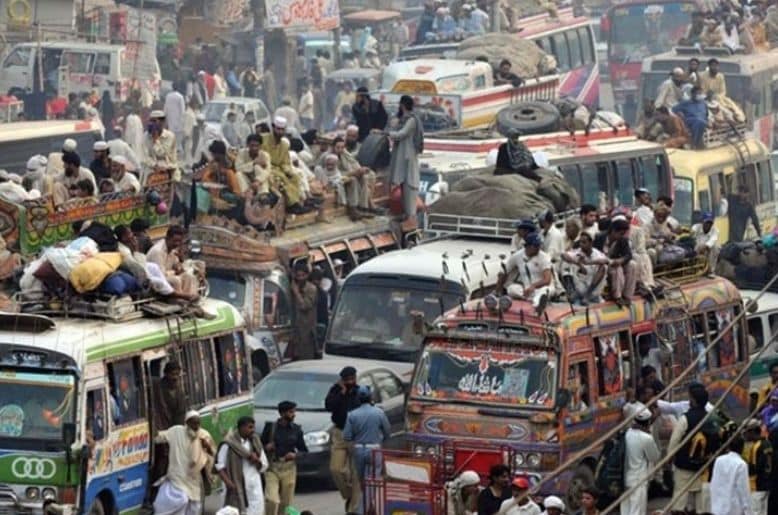
The Sindh government has rejected the Economist Intelligence Unit’s (EIU) Global Liveability Index 2026 after Karachi was ranked among the world’s least-liveable cities.
According to the annual survey, Karachi ranked 170th out of 173 cities worldwide, ahead of only Dhaka, Tripoli and Damascus. The index evaluates cities based on stability, healthcare, culture and environment, education, and infrastructure.
Reacting to the report on Friday, Sindh government spokesperson Sadia Javed said she “completely disagrees” with the findings and questioned the methodology used by the EIU.
“I don’t know what criteria and benchmarks they adopted for conducting this survey,” she said while speaking to a private news channel.
Javed argued that Karachi remains Pakistan’s economic hub and continues to attract nearly 500,000 people annually from across the country in search of better education, healthcare and employment opportunities.
Highlighting the province’s healthcare system, she claimed Karachi has the country’s largest public healthcare infrastructure, with significant investments made to improve medical services.
Responding to criticism over Karachi’s transport system, Javed acknowledged delays in public transport projects but said the Red Line and Yellow Line Bus Rapid Transit (BRT) schemes are progressing rapidly.
She also defended Sindh’s healthcare policy, saying residents do not require a health card because treatment is available free of charge at major public hospitals, including NICVD, JPMC, SIUT, NICH and Civil Hospital Karachi.
To support her claims, Javed noted that senior government officials, including Sindh Senior Minister Sharjeel Inam Memon and President Asif Ali Zardari, have received treatment at public hospitals in the province.
Addressing Karachi’s long-standing water crisis, she admitted that residents have legitimate concerns over water shortages and said the government is working to improve the city’s pipeline network so households receive water directly instead of relying on water tankers.
FAQs
Q1: Why did the Sindh government reject Karachi’s ranking in the Global Liveability Index 2026?
A: Sindh government spokesperson Sadia Javed rejected the ranking, saying she disagreed with the Economist Intelligence Unit’s (EIU) methodology and argued that Karachi continues to attract hundreds of thousands of people each year for education, healthcare and employment.
Q2: What position did Karachi receive in the Global Liveability Index 2026?
A: Karachi ranked 170th out of 173 cities in the EIU’s Global Liveability Index 2026, placing it among the world’s least-liveable cities.
Q3: How did the Sindh government respond to concerns about Karachi’s infrastructure?
A: The government acknowledged challenges such as water shortages and delays in transport projects but said work is progressing on the Red Line and Yellow Line BRT systems and efforts are underway to improve the city’s water supply network.
Also read: New rules set for rickshaws in Karachi

