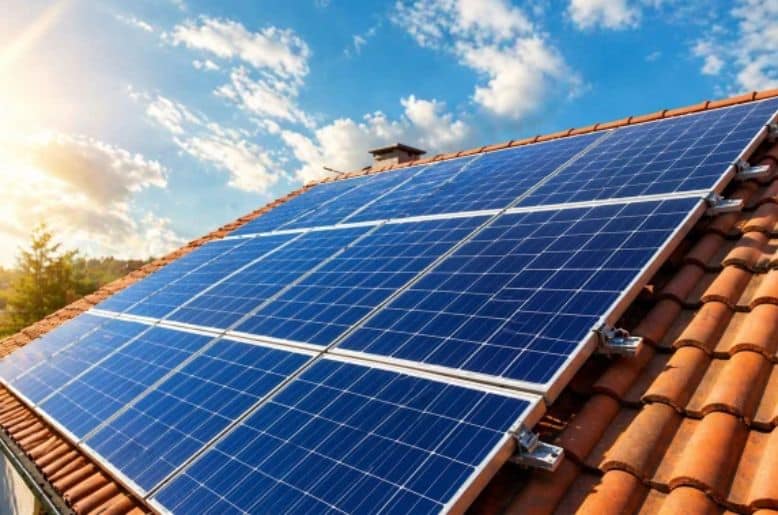
The prices of solar panels, lithium batteries and inverters have dropped in Karachi. The decline follows after the federal budget brought changes in the market prices, making solar equipment more affordable for households and businesses considering a shift to renewable energy.
Karachi’s electronics market traders say lithium battery prices have fallen by approximately Rs20,000. Inverters have become cheaper by as much as Rs10,000. Solar panel prices have also decreased by around Rs3,000 per panel.
However, rumours stated that prices had risen before the federal budget because of widespread rumours that the government would impose additional taxes on imported solar panels, batteries and inverters. Many dealers purchased and stored large quantities of equipment, hoping to sell their stock later at higher rates and earn larger profits.
The expected tax measures were not introduced in the federal budget. Consumer demand also contributed to the downward pressure on prices. Resultantly, retailers began reducing prices across various categories of solar equipment.
Current market rates show that 585-watt, 645-watt and 720-watt solar panels are now selling for about Rs45 per watt, compared with roughly Rs50 per watt only a few days earlier. This shows a reduction in installation costs for new solar systems. On the other hand, a 5kWh lithium battery is available for around Rs230,000, while 3kW to 5kW inverters are priced between Rs120,000 and Rs300,000, depending on brand, capacity and features.
The market is likely to remain favourable for buyers if present conditions continue. The latest price reductions are expected to encourage more people to invest in solar energy, helping lower electricity costs while supporting the growing use of renewable power across Pakistan.
Earlier, the Lahore Electric Supply Company (LESCO) issued a new policy regarding net metering and solar installations, introducing stricter requirements for systems exceeding 14 kilowatts (kW).
Under the revised policy, consumers installing solar systems of up to 14 kW will continue to follow the existing net metering procedure without any additional conditions. However, for systems above 14 kW, users will now be required to install their own dedicated transformer as a mandatory condition. Failure to comply will result in ineligibility for net metering.
LESCO officials stated that the move aims to better regulate high-load solar installations and reduce pressure on the electricity distribution network. According to the company, the increasing number of large-scale solar generators has created technical challenges for the grid, prompting the introduction of a more structured regulatory framework.
The new policy also makes a five-year agreement between LESCO and the consumer compulsory. During this period, users will be allowed to generate electricity and supply it to the national grid under clearly defined terms, ensuring better monitoring and transparency in the system.
In addition, the application process has been fully digitized to enhance efficiency and transparency. Applicants have been advised to submit their requests online only through authorized companies. After approval, a generation license will be issued by NEPRA, following which the system will be connected to the grid.
LESCO further stated that the updated policy will help streamline regulatory procedures for large solar consumers while improving technical oversight of the power distribution system.
Also Read: IESCO explained: Powering your home and busssiness