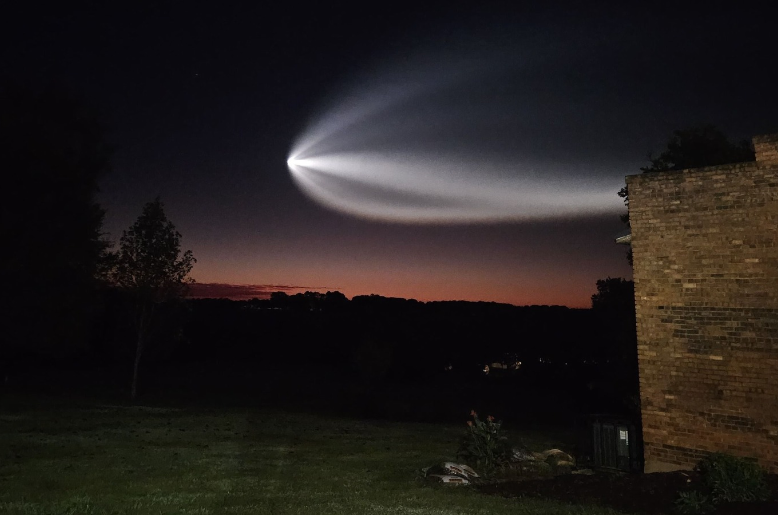
The SpaceX Falcon 9 rocket launch created a remarkable sight across the eastern United States on October 13, 2026. The rocket carried a Dragon cargo spacecraft toward the International Space Station (ISS). Its bright exhaust plume spread across the morning sky and looked like a giant glowing jellyfish. The unusual sight attracted attention from people who saw the rocket from different locations. Some observers initially found the glowing shape confusing. However, the display had a scientific explanation linked to rocket exhaust, sunlight, and atmospheric conditions.
The launch also highlighted the important role of SpaceX in space transportation. The company regularly sends satellites, cargo, and astronauts into orbit. Its Falcon 9 rocket supports many of these missions through reusable rocket technology. For readers in Pakistan, this event offers a simple way to understand modern space technology. It shows how rocket launches can support scientific research while creating striking views from Earth.
What Happened During the Latest SpaceX Falcon 9 Rocket Launch?
On October 13, 2026, SpaceX launched a Falcon 9 rocket from Cape Canaveral Space Force Station in Florida. The rocket carried a Dragon cargo spacecraft on NASA’s CRS-35 resupply mission to the International Space Station. The rocket lifted off at 6:35 a.m. Eastern Daylight Time, or 10:35 GMT. Its flight path followed a route along the eastern coast of the United States. This helped make the glowing plume visible to observers far from the launch site.
The Dragon spacecraft carried approximately 6,300 pounds, or 2,860 kilograms, of cargo. These supplies were intended for the astronauts and scientific work aboard the orbital laboratory. The mission was part of NASA’s ongoing partnership with SpaceX. NASA relies on commercial spacecraft to transport equipment, food, and research materials to the station.
The Falcon 9’s first stage separated about two and a half minutes after liftoff. The first stage then began its return journey, while the upper stage continued carrying Dragon toward orbit. This separation is a normal part of the rocket’s flight. Each stage performs a different job, helping the vehicle deliver its payload efficiently.
Why Did the Rocket Create a Glowing Space Jellyfish?
The glowing shape was not an actual jellyfish or an unexplained object. It was a visual effect created by the rocket’s exhaust plume under the right lighting conditions. A rocket engine releases hot gases as it pushes a vehicle upward. At high altitudes, the surrounding air becomes much thinner. The exhaust gases can expand rapidly and form a large plume behind the rocket.
When a launch happens near sunrise or sunset, sunlight can illuminate this plume even while the ground remains dark. The result can resemble a giant jellyfish floating across the sky. The effect becomes more dramatic when the plume spreads into a broad, bright shape. Its appearance can change as the rocket climbs higher and the exhaust expands.
The glowing plume does not mean the rocket has exploded. It is a natural result of the launch environment and the way sunlight reaches the exhaust at high altitude. The launch provided another example of how ordinary physical processes can produce unusual sights. It also showed why launch timing matters to photographers and skywatchers.
How Could People See the Rocket From So Far Away?
Many people assume a rocket launch can only be seen near its launchpad. However, a rocket can remain visible over a large area when weather and lighting conditions are suitable. The rocket travels upward at high speed. As it gains altitude, its exhaust plume can become visible above distant locations. The bright plume may also spread across a wide part of the sky. During the October 13 launch, observers reported sightings across several parts of the eastern United States. Reports included locations in Georgia and North Carolina.
Three factors helped make the display noticeable:
- Launch timing: The rocket lifted off near sunrise.
- High altitude: The plume expanded as the rocket climbed.
- Sunlight: The Sun illuminated the plume while many areas remained relatively dark.
Clear skies also help people see these displays. Clouds, haze, buildings, and local light pollution can affect visibility. The same effect does not appear during every launch. Different flight paths, weather conditions, and launch times produce different results.
What Was the Purpose of the CRS-35 Mission?
The main purpose of the mission was to deliver supplies and research equipment to the International Space Station. The ISS is a large research laboratory that orbits Earth. Astronauts from different countries live and work there. They conduct experiments that help scientists understand space and improve technology used on Earth. Cargo missions are essential because astronauts need regular supplies. These include food, clothing, equipment, spare parts, and materials for scientific experiments.
NASA’s CRS-35 mission continued this important work. The Dragon spacecraft carried cargo that would support the station’s crew and ongoing research. The spacecraft was expected to reach the ISS on October 15, 2026. The planned docking location was the station’s Harmony module. The mission demonstrates that rocket launches are not only about reaching space. They also support research that can benefit people on Earth.
For example, experiments aboard the ISS can help scientists study how living organisms respond to microgravity. Researchers can also test materials, equipment, and technologies in conditions that are difficult to reproduce on Earth.
How Does the Falcon 9 Rocket Work?
The Falcon 9 is a two-stage rocket developed by SpaceX. It carries satellites, cargo spacecraft, and other payloads into space. Its design allows the first stage to return to Earth and fly again after suitable inspection and refurbishment. This is one of the main features that makes the rocket important to modern spaceflight.
1. The Rocket Lifts Off
The rocket’s engines produce thrust by releasing hot gases downward. This force pushes the vehicle upward against Earth’s gravity. During the first moments of flight, the rocket passes through the lower atmosphere. It gradually gains speed and altitude.
2. The First Stage Separates
After the first stage completes its main job, it separates from the upper stage. This usually happens a few minutes after liftoff. The upper stage continues accelerating the payload toward its intended orbit. Meanwhile, the first stage begins its return sequence.
3. The Booster Returns to Earth
The first stage uses controlled engine burns to adjust its speed and direction. Depending on the mission, it may land on a drone ship at sea or return to a landing site on land. This process allows SpaceX to recover valuable rocket hardware. The company can then prepare suitable boosters for future flights.
4. The Payload Reaches Orbit
The upper stage carries the payload toward its target orbit. Once the spacecraft reaches the correct conditions, it can separate from the rocket. For a cargo mission, the Dragon spacecraft then continues toward the International Space Station. For a Starlink mission, the payload consists of satellites designed to join the company’s internet network. Each stage must work correctly for the mission to achieve its objectives.
Why Is Rocket Reuse Important for SpaceX?
Rocket reuse is one of the most important features of the Falcon 9 program. Traditional rockets often lose much of their main hardware after launch. Reusable boosters can return for another flight instead. Recovering a booster does not make a launch free. SpaceX must inspect, maintain, and prepare the hardware before using it again. The company must also replace or service parts when necessary.
However, reuse can reduce the need to build a completely new first stage for every mission. This can help lower costs and support a higher launch rate. Reusable rockets also help companies plan more frequent flights. This matters as demand grows for satellite internet, scientific missions, and commercial space transportation.
Still, reuse has limits. Not every rocket component returns to Earth, and each booster has its own maintenance requirements. SpaceX must confirm that recovered hardware remains suitable for another flight. The wider lesson is that reusable technology can change how companies operate. It may improve efficiency, but it also requires careful engineering and strict safety checks.
How Does Falcon 9 Support Starlink and Other Missions?
Falcon 9 serves several purposes within SpaceX’s launch program. One of its best-known roles is deploying Starlink satellites. Starlink is a satellite internet network designed to provide broadband connectivity in many parts of the world. Its satellites operate in low Earth orbit, much closer to Earth than traditional geostationary communications satellites. The company launches groups of satellites to expand or maintain the network. These missions require reliable rockets that can carry multiple satellites during one flight.
Falcon 9 also supports NASA cargo missions and commercial satellite customers. Its ability to serve different customers makes it a major part of the global launch industry. For Pakistan, satellite internet is an important area to watch. Many communities face connectivity challenges because of distance, difficult terrain, or limited infrastructure. Satellite networks could offer another way to provide internet access in suitable areas.
However, availability alone does not guarantee affordable service. Equipment costs, monthly fees, regulatory approval, and network coverage all affect whether people can use a satellite internet service. Falcon 9 launches also support scientific and commercial work beyond internet connectivity. They help place equipment into orbit for communications, Earth observation, research, and other purposes. This variety explains why the rocket remains important to SpaceX’s business.
Could People in Pakistan See a SpaceX Rocket Launch?
People in Pakistan may see satellites and other objects moving across the night sky under suitable conditions. However, seeing a particular rocket launch depends on its trajectory, altitude, timing, and viewing location. The glowing space jellyfish reported during the October 13 launch was seen across parts of the eastern United States. It was not a global sky display. Pakistan is far from the Florida launch site, so observers should not expect to see this specific event from Lahore, Karachi, Islamabad, or other Pakistani cities.
People in Pakistan can still follow launches through official livestreams, mission updates, and recorded videos. These sources can show liftoff, stage separation, booster recovery, and spacecraft deployment. Anyone hoping to watch a rocket launch should check the mission’s confirmed schedule first. Launch times can change because of weather, technical issues, or other operational concerns.
For local skywatching, satellite-tracking tools can help people identify visible spacecraft passing overhead. Visibility depends on the object’s orbit and sunlight conditions, so not every pass will be easy to see.
What Does This Launch Tell Us About the Future of Space Exploration?
The October 13 mission highlights three important developments in modern spaceflight. First, commercial companies now play a major role in transporting cargo and equipment to space. NASA can work with private providers instead of relying entirely on government-owned launch systems. Second, reusable rockets have become a practical part of regular launch operations. Recovering and reusing boosters can help companies manage launch costs and schedules.
Third, space technology now supports a growing range of services. Satellite internet, scientific research, communications, and Earth observation all depend on reliable access to orbit. However, frequent launches also create challenges. Companies must manage space traffic, prevent collisions, reduce debris risks, and follow safety requirements. Rocket launches also produce emissions and require careful environmental oversight.
The future of spaceflight will depend on more than launching rockets quickly. It will also require responsible operations, reliable technology, and international cooperation. For readers following technology news, Falcon 9 offers a useful example of how engineering can influence industries beyond aerospace.
Final Thoughts
The SpaceX Falcon 9 rocket launch on October 13, 2026, carried a Dragon cargo spacecraft toward the International Space Station. It also created a glowing plume that looked like a giant jellyfish across parts of the eastern United States. The unusual sight had a clear scientific explanation. Sunlight illuminated the expanding rocket exhaust while the ground remained relatively dark.
Beyond the visual spectacle, the mission showed how reusable rockets support regular space operations. Falcon 9 helps transport cargo, deploy satellites, and maintain important services in orbit. For readers in Pakistan, the launch offers a simple lesson about the growing role of space technology. These missions support scientific research and satellite services that can affect communication and daily life. As commercial spaceflight continues to develop, Falcon 9 will remain an important example of reusable rocket technology and modern space transportation.
SpaceX and Tesla’s Texas Chip Project Could Rival Economies With Its Bold Tech Vision.
FAQ
Q. What is the SpaceX Falcon 9 rocket launch?
It is a rocket mission that carries satellites, cargo spacecraft, or other payloads into space.
Q. Why did the Falcon 9 launch create a space jellyfish?
Sunlight illuminated the rocket’s expanding exhaust plume near sunrise, creating a glowing shape that resembled a jellyfish.
Q. What did the October 13, 2026, launch carry?
The rocket carried a Dragon cargo spacecraft on NASA’s CRS-35 mission to deliver supplies and research equipment to the ISS.
Q. Can people in Pakistan see a Falcon 9 rocket launch?
People in Pakistan can watch launches online. Seeing a specific launch from Pakistan depends on its flight path and viewing conditions.
Q. Can SpaceX reuse the Falcon 9 rocket?
Yes. SpaceX can recover and reuse Falcon 9 first-stage boosters after inspection and refurbishment.