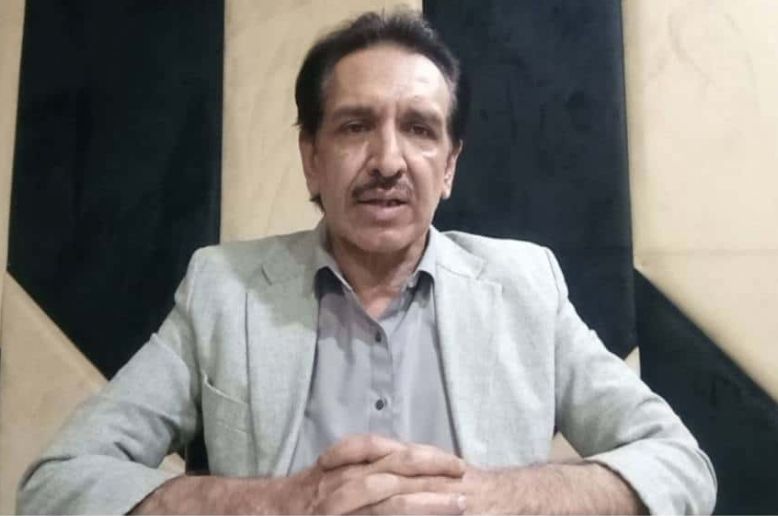
Senior journalist and analyst Aqeel Ahmed Yousafzai has revealed that some key leaders of the banned Tehreek-e-Taliban Pakistan (TTP) were previously associated with Jamiat Ulema-e-Islam (JUI-F) and Fazlur Rehman’s party.
According to Yousafzai, they include Baitullah Mehsud, who reportedly served as a JUI-F official in Waziristan; Hakimullah Mehsud, who he said had an ideological affiliation with Fazlur Rehman; and Umar Khalid Khorasani, founder of Jamaat-ul-Ahrar, who was also reportedly associated with the party.
The senior journalist also said that, in the past, PTI founder Imran Khan and Maulana Fazlur Rehman had adopted different strategies to exert political pressure on the establishment. According to him, both leaders took the position that if they were not made stakeholders in political affairs, there was a risk of a new movement emerging in Khyber Pakhtunkhwa, Balochistan, and particularly in some areas of the former Federally Administered Tribal Areas (FATA), along the lines of the Taliban model in Afghanistan.
Aqeel Ahmed Yousafzai said that Maulana Fazlur Rehman’s party was later given a share in the government. However, in the current political situation, several other political leaders, including Mahmood Khan Achakzai, are once again taking a strong stance against the establishment. He added that Maulana Fazlur Rehman was scheduled to visit India in September, where he was expected to meet key figures, including Indian National Security Advisor Ajit Doval.
According to Yousafzai, the political landscape is changing amid growing political proximity between the PTI and Maulana Fazlur Rehman. He said that if a long march or major political movement begins on September 27, the situation surrounding Maulana Fazlur Rehman’s possible visit to India in October may become clearer.
Senior Journalist faces threats after exposing direct JUI-F and TTP links
Meanwhile, a new controversy has emerged following recent claims about alleged links between Jamiat Ulema-e-Islam-Fazl (JUI-F), the Afghan Taliban, and the Tehreek-e-Taliban Pakistan (TTP). According to a report, concerns have also been raised over the safety of journalist Aqeel Yousafzai following strong reactions to these claims.
Aqeel Yousafzai is one such journalist. A native of Swat district in Khyber Pakhtunkhwa, he has spent years reporting on and analysing issues related to Afghanistan, terrorism, Pak-Afghan relations, and border security.
According to the DND website, as an independent journalist, Aqeel Yousafzai has earned a reputation for speaking openly on sensitive political and security issues, often taking positions that may draw criticism from influential figures. His outspoken reporting has also raised concerns about his personal safety after a recent controversy over his remarks about Jamiat Ulema-e-Islam-Fazl (JUI-F) and the Tehreek-e-Taliban Pakistan (TTP).
Yousafzai has extensively reported and commented on what he describes as a dangerous nexus involving criminals, politicians, smugglers, and militant groups, particularly along the Pakistan-Afghanistan border. He has also highlighted the scale of cross-border smuggling, which he claims amounts to more than Rs3.6 trillion annually. In a recent interview, Yousafzai made a series of claims that reportedly triggered a strong reaction from JUI-F supporters. Aqeel Yousafzai also spoke about alleged ideological and organisational links between JUI-F and the Tehreek-e-Taliban Pakistan (TTP).
According to him, some key figures in the TTP leadership had been associated with Jamiat Ulema-e-Islam in the past. However, a person’s past political or religious affiliation alone cannot be considered evidence of direct organisational cooperation or an active connection in the present. Any such claim would require separate, authentic, and verifiable evidence to establish a current relationship.
Read more: Molana Fazal ur Rehman asks banned JAAC leadership to end protest