
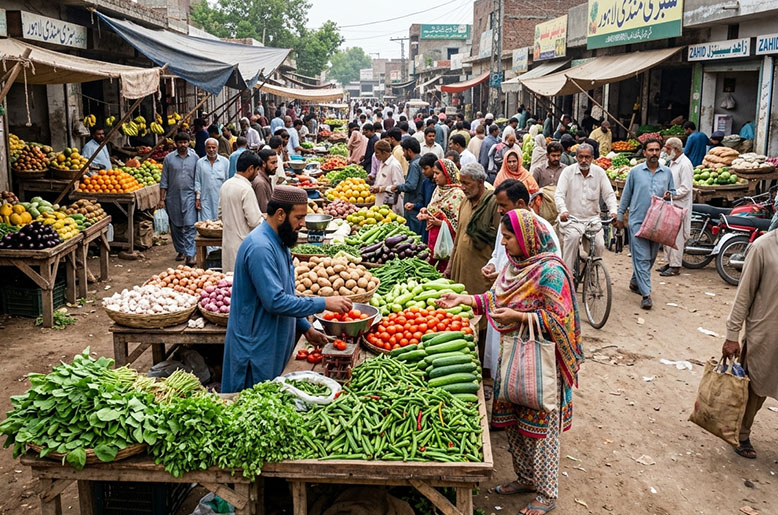
Short-term inflation in Pakistan showed a mild easing in the week ending June 04, 2026, offering some relief to households already struggling with rising living costs.
According to data released by the Pakistan Bureau of Statistics, the Sensitive Price Indicator, which tracks changes in the prices of essential items, fell by 0.56 percent compared to the previous week. The index monitors 51 key commodities across 50 markets in 17 cities, giving a snapshot of everyday price movements that directly affect consumers.
The latest figures suggest that while some relief was seen in fuel and food items, pressure in kitchen essentials continues to persist.
During the week, prices of chicken, garlic, petrol and diesel recorded noticeable declines. Chicken fell by 9.48 percent, while garlic dropped by 9.13 percent. Fuel prices also eased, with petrol down 6.80 percent and diesel lower by 7.01 percent. Pulses and some other food items showed only minor changes.
At the same time, several essential kitchen items became more expensive. Onions recorded a sharp increase of 28.16 percent, followed by potatoes at 21.91 percent and tomatoes at 9.56 percent. Prices of milk, cooking oil, wheat flour and LPG also edged higher, adding to household expenses at a time when budgets remain tight.
Out of the 51 items tracked, prices of 22 increased, 10 decreased and the remaining stayed unchanged, highlighting an uneven trend in weekly inflation.
On a broader yearly basis, inflation pressures remain strong. The Sensitive Price Indicator rose by 14.75 percent compared to the same week last year. Major annual increases were seen in onions, wheat flour, electricity charges, petrol and diesel, showing how core living costs have remained elevated over time.
Meanwhile, prices of fertiliser and construction materials showed mixed movement. The average price of Sona Urea rose slightly to Rs4,638 per 50 kg bag, while cement prices dipped to Rs1,517 per 50 kg bag, though still higher than last year.
For many households, the latest data reflects a familiar pattern, some relief in select items, but persistent pressure on daily essentials that continue to stretch monthly budgets.
Read next: Essential food items drive increase in weekly inflation
