A first of its kind sighting
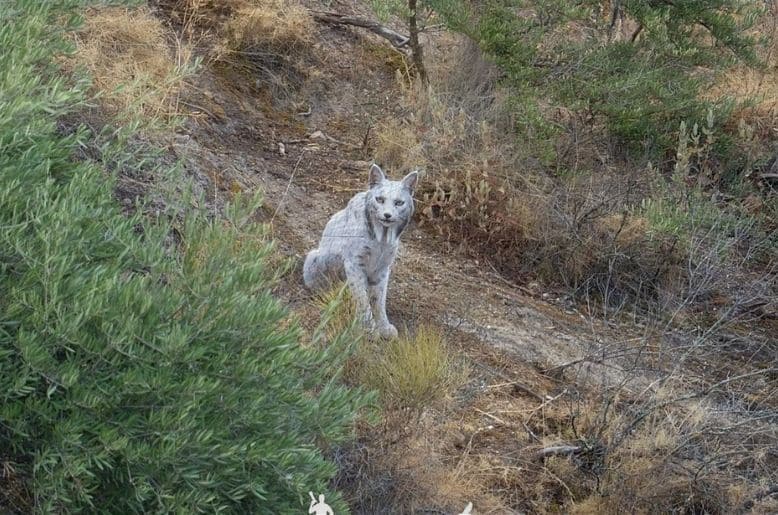
A nature photographer, Ángel Hidalgo, has captured video of a white Iberian lynx in the hills of Jaén, Andalusia, on 22nd October.
The animal has no tracking collar, suggesting it is living fully in the wild. Furthermore, the exact location is being kept secret to protect the cat.
What makes this lynx white?
Experts say the lynx shows leucism, a genetic condition that causes partial or total loss of pigment in fur and skin.
It is not albinism: albino animals also lose eye pigment, while leucistic animals usually keep normal eye colour.
Why white Iberian lynx is important to Conservationists
The sighting highlights the strong recovery of Lynx pardinus across the Iberian Peninsula.
Once near extinction, the population has now exceeded 2,000 thanks to years of releases (since 2011), habitat work, and protection in Spain and Portugal.
Even so, the Iberian lynx remains “Vulnerable” on the IUCN Red List.
Key role in the ecosystem
The Iberian lynx is a top predator in the Mediterranean forest, feeding mainly on rabbits.
If the lynx disappears, rabbit numbers can surge, upsetting the balance of the food chain and the health of the wider ecosystem.
Conservationists warn that a white coat could make this lynx easier to spot, increasing risks from poachers or disturbance.
Therefore, the site is undisclosed, and why continued responsible tourism and anti-poaching efforts matter.
This extraordinary white lynx is a symbol of conservation progress and a reminder that protecting habitats and wildlife is the only way to keep such wonders in our forests.
