
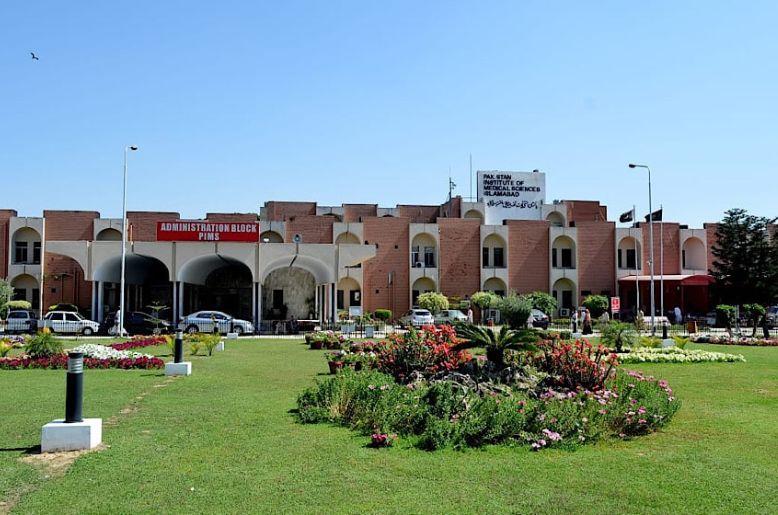
The Pakistan Institute of Medical Sciences (PIMS) has received a new Executive Director following the suspension of Grade-21 officer Professor Dr Rana Imran Sikander.
According to an official notification, Professor Dr Rana Imran Sikander has been formally suspended for four months.
Meanwhile, National Institute of Health (NIH) Executive Director Dr Muhammad Salman has been appointed as the new Executive Director of PIMS Hospital for a period of three years. He will continue performing his duties as Executive Director of the NIH alongside his new assignment at PIMS.
In another administrative reshuffle, Dr Altaf Hussain has been appointed as Joint Executive Director of PIMS for three months. Notifications regarding further administrative changes and appointments across different departments of the hospital have also been issued.
The latest changes come after Prime Minister Shehbaz Sharif took strict notice of the tragedy at PIMS and approved the immediate suspension of eight officials, including Professor Dr Rana Imran Sikander, along with disciplinary action against them.
Following the prime minister’s directives, action was also approved against the PIMS administration and other officials found responsible. The government also ordered action against the security company deployed at the hospital and its office-bearers.
Among those suspended were PIMS Joint Executive Directors Dr Mutahir Shah and Dr Owais Ali Shah. Other officials facing action include Dr Nausheela Amjad, Assistant Director Security Muhammad Usman, CDA Emergency Service DG Abdul Rehman, Head of the Neonatal Department Dr Saadia Riaz, and a senior registrar.
The administrative overhaul comes as authorities continue to introduce changes across various departments of PIMS following the tragedy, with further decisions regarding responsibilities and hospital management expected.
It is important to mention here that Professor Dr Rana Imran Sikandar, who faced tough questions from reporters after the death of 14 children in a fire at the nursery ward of Pakistan Institute of Medical Sciences (PIMS), was appointed as the hospital’s permanent Executive Director (ED) in July 2025.
Following the tragic incident, Dr Rana Imran said that the ED’s role was to supervise rather than personally handle every matter, adding that he believed he had carried out his supervisory responsibilities properly.
However, questions were raised over the nursery’s closed entrance, access for fire brigade vehicles and overall fire-safety arrangements at the hospital.
Dr Rana Imran’s appointment as permanent ED came after PIMS had remained without a permanent head for nearly six years. His appointment is expected to continue until his retirement in 2031.
The appointment followed a Supreme Court ruling that allowed faculty members to be considered for the Grade-21 position of Executive Director at PIMS.
His appointment had earlier been challenged by some senior PIMS doctors and faculty members, who raised questions regarding seniority, qualifications and the applicable rules.
Senior doctors, including Dr Ayesha Aisani and Dr Mutahir Shah, approached the Islamabad High Court, arguing that merit and seniority had allegedly been overlooked in the appointment process. Senior doctor Iqbal Durrani also approached the Federal Service Tribunal and the high court, maintaining that the head of a major hospital such as PIMS should be appointed from the management cadre rather than clinical or teaching faculty.
Questions were also raised over some of Dr Rana Imran’s Annual Confidential Reports (ACRs), which had been prepared during his tenure as head of the anaesthesia department and were reportedly disputed in relation to the rules governing an equivalent-grade post.
The matter eventually reached the Supreme Court, which clarified that medical specialists and faculty members could also be appointed as heads of hospitals. The ruling subsequently cleared the way for Dr Rana Imran’s permanent appointment as PIMS Executive Director.
Also read: ‘No SOPs, no fire alarm’: Interim Inquiry report highlights PIMS safety failures

