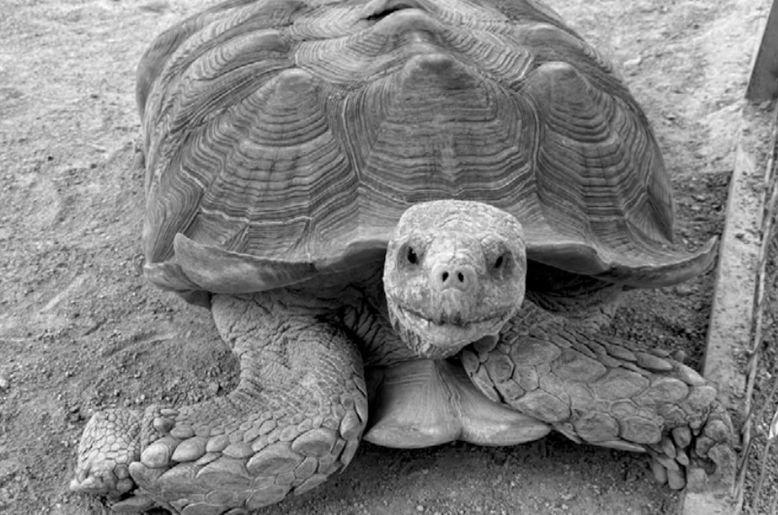
A 70-year-old African spurred tortoise has become a major attraction for citizens, particularly children, at a zoo in B-17, Islamabad. Belonging to the remarkable species Centrochelys sulcata, the tortoise is native to the Sahara Desert and is known for its impressive size and exceptionally long lifespan.
Weighing around 15 to 16 kilograms, the 70-year-old tortoise may be slow-moving, but its age and species make it a remarkable attraction for visitors. The African spurred tortoise, scientifically known as Centrochelys sulcata, is the largest tortoise species in Africa and the largest mainland tortoise species in the world. Adult males can grow to more than 100 kilograms.
Wildlife experts say that with proper care and a suitable environment, these tortoises can live for 100 years or even longer. The species is also kept in several zoos across Pakistan, giving visitors an opportunity to observe one of the world’s longest-living land tortoises up close.
One of the most notable examples in the country is “Julie,” a tortoise at Karachi Zoo. According to a 2018 report, Julie was 50 years old at the time and weighed 150 kilograms.
Globally, however, the Galápagos giant tortoise is the largest living land tortoise, with some individuals weighing more than 400 kilograms. The oldest known living land animal is “Jonathan,” an Aldabra giant tortoise that is more than 190 years old and lives on the British overseas territory of Saint Helena.
The presence of this elderly tortoise in Islamabad provides citizens, especially children, with an opportunity to learn about wildlife, longevity, and the remarkable diversity of tortoise species. It also offers an interesting connection to the region’s rich historical and cultural heritage, particularly the ancient city of Taxila and the historic land of Gandhara.
On the other hand, Madhubala, the female elephant transferred from Karachi Zoo to Safari Park in 2024, has fallen ill after suddenly collapsing yesterday. She has a history of foot infections and abscesses. According to sources, a crane was used to help her stand, and she is currently unable to use her hind leg due to swelling in her thigh.
Madhubala has also recently been suffering from a calcium deficiency, and several medical tests have been conducted to assess her condition. The Safari Park administration says that her treatment includes antibiotics, which have been prescribed due to the risk of a bacterial infection.