
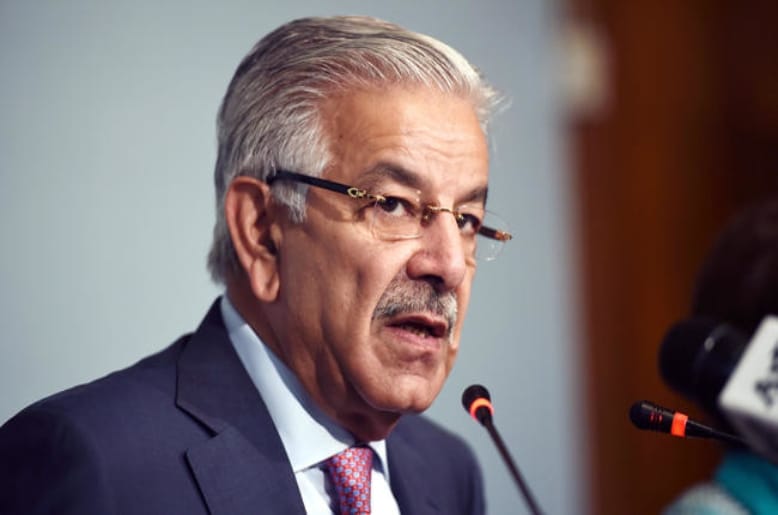
Defence Minister Khawaja Asif has said that Field Marshal Asim Munir visited Tehran as an ambassador of peace to help establish peace in the region and pave the way for reconciliation between the parties.
Speaking in the National Assembly, Khawaja Asif clarified that no defence agreement was being negotiated in Tehran, nor were discussions held on any matter related to Pakistan’s defence.
He said Field Marshal Asim Munir had played an important role in promoting peace and dialogue for Pakistan following the war that began last year. He added that the activities in Tehran were unrelated to the affairs of the Defence Ministry.
The defence minister said Pakistan and Saudi Arabia had already signed a defence agreement, while defence agreements had also been concluded among Qatar, Türkiye, Pakistan and Indonesia. He made it clear that the peace efforts in Tehran were separate from these agreements.
Khawaja Asif said Field Marshal Asim Munir worked to reduce the risk of escalation and create a path towards peace in the region.
Responding to questions in the National Assembly about his role, the defence minister explained that his presence in Tehran was not necessary because the activities taking place there did not fall within the Defence Ministry’s jurisdiction.
Defence Minister Khawaja Asif criticised Jamiat Ulema-e-Islam-Fazl (JUI-F) chief Maulana Fazlur Rehman over his political record, questioning his past decisions and role in successive political governments.
Khawaja Asif said political leaders should remember their own past positions and decisions before criticising others. He also questioned the context in which Fazlur Rehman offered his services for negotiations in Iran.
The defence minister pointed out that Fazlur Rehman had been part of the political setup during General Pervez Musharraf’s rule and had also served as chairman of the National Assembly’s Kashmir Committee.
Asif asked Fazlur Rehman to explain what he had accomplished for the Kashmir cause during his tenure as the committee’s chairman.
Referring to his own political past, the defence minister acknowledged that he had supported General Zia-ul-Haq’s government but later apologised for his position in light of subsequent developments.
Asif said political differences were natural, but no political leader should consider himself above criticism.
He also commented on Fazlur Rehman’s religiously driven political approach, saying that while it was his chosen style of politics, other political parties also had the right to make decisions according to their circumstances and political interests.
Pointing towards Pakistan Tehreek-e-Insaf (PTI) lawmakers, Asif said political alignments were changing and parties were making decisions based on their interests.
However, the defence minister acknowledged Fazlur Rehman’s place in Pakistan’s political history, noting that his father had also been an important political figure.
He stressed that despite political differences, national leaders should recognise Pakistan’s role internationally and acknowledge the efforts made by Field Marshal Asim Munir.
Asif further urged political parties to demonstrate tolerance and respect for one another, recalling that rival parties had previously worked together in coalition governments.
He said political criticism should not undermine mutual respect among leaders who had shared power and cooperated in the past.

