Polling has begun across Gilgit-Baltistan for the 2026 general elections, where voters are casting ballots to elect representatives for 24 seats of the regional assembly amid strict security arrangements.
According to the Election Commission, polling started at 8:00am and will continue uninterrupted until 5:00pm. More than 958,000 registered voters are eligible to vote, while over 400 candidates are contesting the elections.
Authorities finalised all electoral and security measures ahead of polling day. Law enforcement agencies also conducted flag marches in different areas of the region to ensure a peaceful voting process and maintain public order throughout the elections.
Polling Schedule
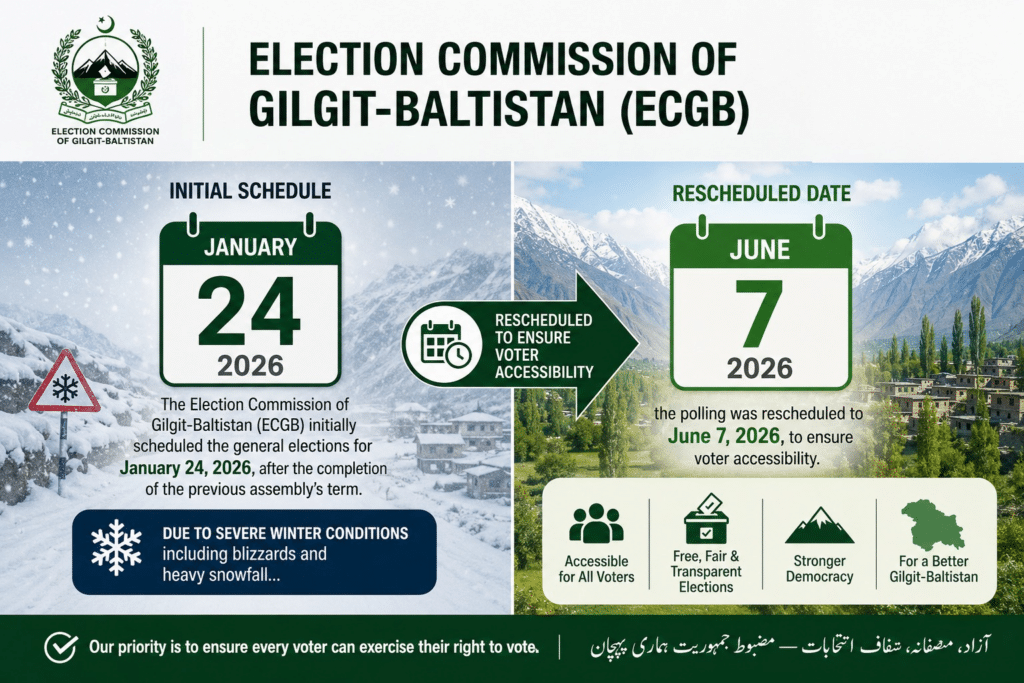
The Election Commission of Gilgit-Baltistan (ECGB) initially scheduled the general elections for January 24, 2026, after the completion of the previous assembly’s term. However, due to severe winter conditions, including blizzards and heavy snowfall, the polling was rescheduled to June 7, 2026, to ensure voter accessibility.
GB Assembly Structure and Seats
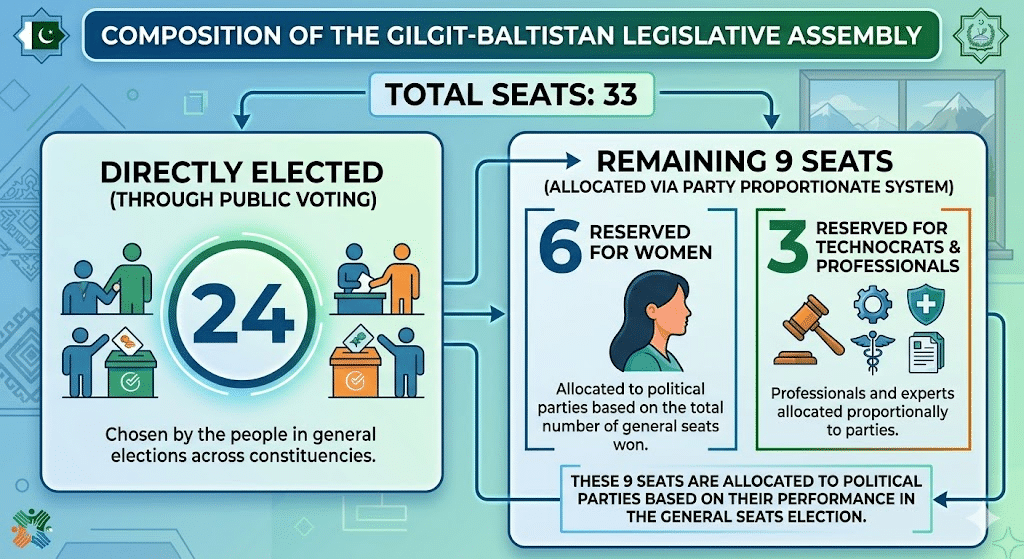
The Gilgit-Baltistan Legislative Assembly consists of 33 total seats, but only 24 are directly elected through public voting.
The remaining 9 seats include:
- 6 reserved for women
- 3 reserved for technocrats and professionals
These are allocated to political parties based on their performance in the general seats.
Candidates and Political Landscape
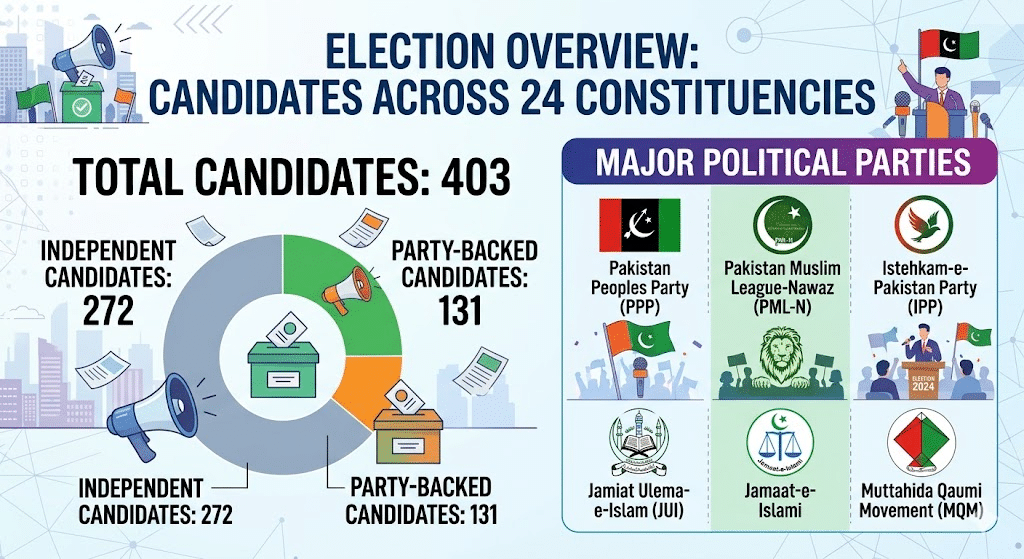
A total of 403 candidates are contesting across 24 constituencies, including:
- 272 independent candidates
- 131 party-backed candidates
Major political parties include:
- Pakistan Peoples Party (PPP)
- Pakistan Muslim League-Nawaz (PML-N)
- Istehkam-e-Pakistan Party (IPP)
- Jamiat Ulema-e-Islam (JUI)
- Jamaat-e-Islami
- Muttahida Qaumi Movement (MQM)
The Pakistan Tehreek-e-Insaf (PTI) is participating without a unified electoral symbol, with its candidates contesting as independents.
Key Constituencies and Regional Contest
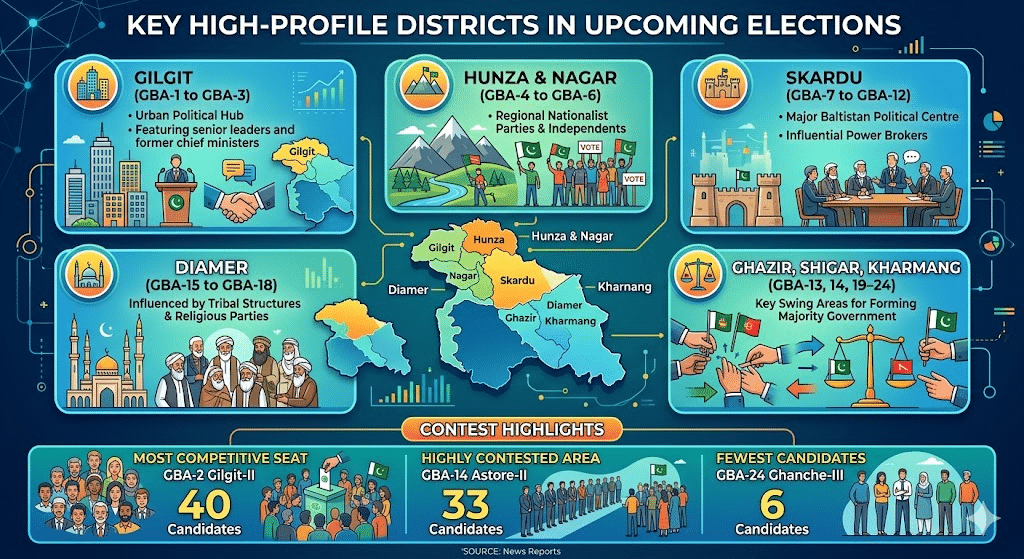
Certain districts are drawing strong attention due to high-profile contests:
- Gilgit (GBA-1 to GBA-3): Urban political hub featuring senior leaders and former chief ministers
- Hunza & Nagar (GBA-4 to GBA-6): Strong presence of regional nationalist parties and independents
- Skardu (GBA-7 to GBA-12): A major political centre in Baltistan with influential power brokers
- Diamer (GBA-15 to GBA-18): Influenced by tribal structures and religious parties
- Ghazir, Shigar, Kharmang (GBA-13, 14, 19–24): Seen as key swing areas for forming a majority government
The most competitive seat is GBA-2 Gilgit-II, where 40 candidates are contesting. Another highly contested area is GBA-14 Astore-II with 33 candidates, while GBA-24 Ghanche-III has the fewest candidates at 6.
Electoral Arrangements and Logistics
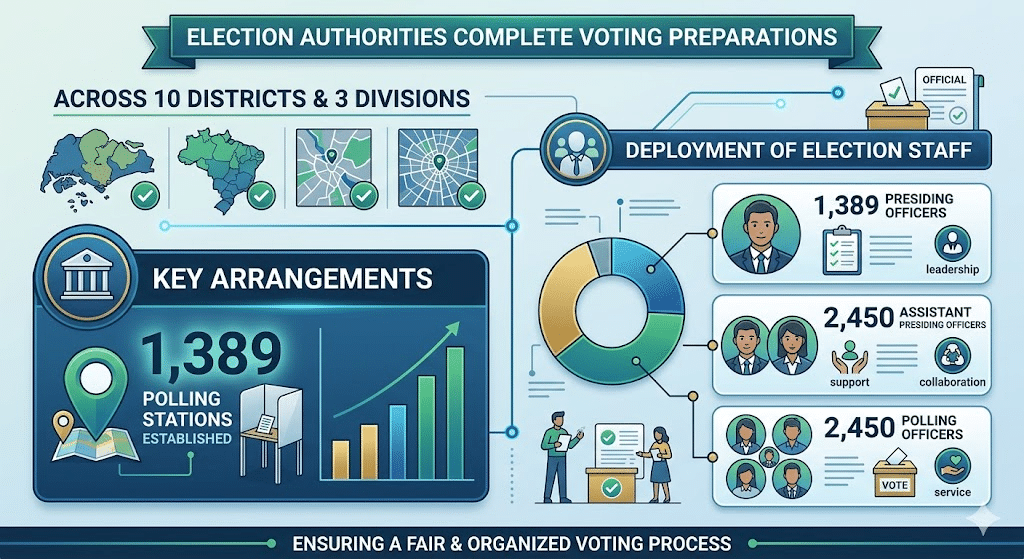
Election authorities have completed preparations for voting across 10 districts in three divisions. Key arrangements include:
- 1,389 polling stations established
- Deployment of election staff including:
- 1,389 Presiding Officers
- 2,450 Assistant Presiding Officers
- 2,450 Polling Officers
Security and Campaign Activity
According to Gilgit-Baltistan Police, political activity intensified but remains under control. Since May 1, the region has seen:
- 614 peaceful political activities
- 62 major public rallies
- 217 public meetings and inauguration events
- 243 political offices established
- 92 political rallies held
Authorities have stated that the security situation remains stable ahead of polling.