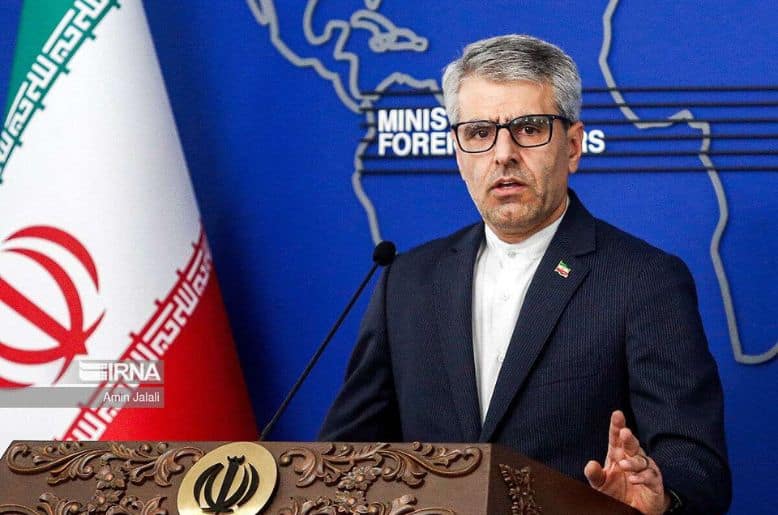
The spokesperson for the Iranian Ministry of Foreign Affairs, Esmail Baghai, has confirmed that Iran has not made any decision regarding the possible peace agreement with the US.
Negotiations between the United States and Iran appear to have moved forward after US President Donald Trump said a memorandum of understanding (MOU) related to a ceasefire agreement had been approved by Iran’s leadership, although Tehran has cautioned that no final deal has yet been reached.
Speaking on Thursday, Trump said plans for military action against Iran had been set aside and claimed that an agreement was nearing completion. He added that the date and location of a signing ceremony would be announced soon.
However, Iran’s Foreign Ministry spokesperson, Esmail Baghai, rejected reports suggesting a final agreement had been secured.
According to Iran’s state-run IRNA news agency, Baghai said that details regarding the timing and location of any signing ceremony remained speculative and that negotiations were still ongoing.
Baghai acknowledged that substantial progress had been made in the talks but accused the United States of repeatedly changing its position during negotiations. He also reiterated Tehran’s long-standing position that it would not abandon what it described as its right to maintain a civilian nuclear programme.
Iran said it would announce its official position in the near future, indicating that a response to Washington’s latest proposals could be imminent.
Meanwhile, Israel confirmed that Prime Minister Benjamin Netanyahu held a phone conversation with Trump to discuss the potential agreement. In a statement, the Israeli Prime Minister’s Office said Israel would not take part in the signing of any memorandum involving the United States, Iran and mediating countries.
Trump later stated on social media that Israel had also approved the framework being discussed, suggesting close coordination between Washington and Jerusalem during the negotiations.
Despite signs of progress, key differences remain. Iran continues to insist on preserving its nuclear development programme, while Trump has maintained that any final agreement must address concerns over Iran’s nuclear capabilities.
According to the Israeli Prime Minister’s Office, Trump said a future deal would require the removal of enriched nuclear material, the dismantling of enrichment facilities, restrictions on missile production and an end to Iranian support for armed proxy groups across the region.
Trump also identified several countries involved in mediation efforts, including Saudi Arabia, the United Arab Emirates, Qatar, Turkey, Pakistan, Bahrain, Kuwait, Jordan and Egypt. Analysts believe these nations are playing an important role in behind-the-scenes diplomacy aimed at narrowing differences between Washington and Tehran.
The developments mark one of the most significant diplomatic efforts between the two countries in recent years, although uncertainty remains over whether the remaining disputes can be resolved.
Read more: UAE announces grace period duration after work visa expires
Also read: British MP Afzal Khan asks for strict action against banned JAAC members for AJK riots