
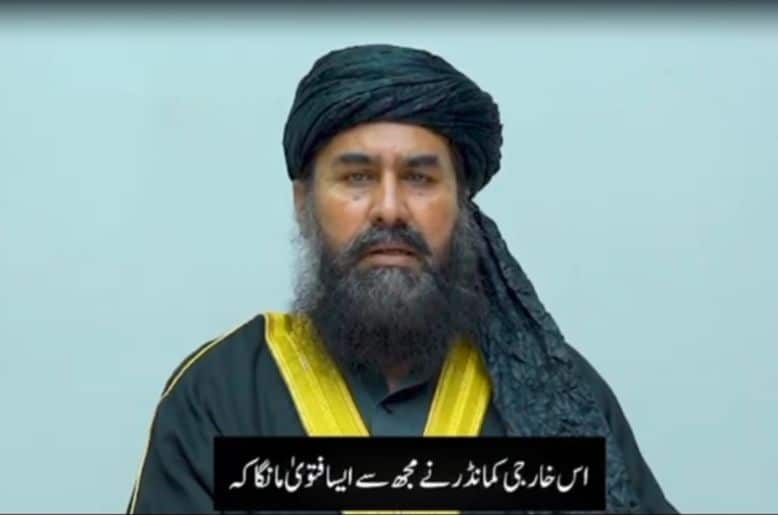
An arrested facilitator of Fitna al Khawarij has revealed that terrorist groups misuse religion and seek self-serving fatwas from unregistered seminaries to recruit operatives, justify criminal activities, and advance extremist agendas.
According to details, the arrested facilitator, Maulvi Zafaryab, studied at Jamia Nizamul Uloom, Bannu, and later became associated with Fitna al Khawarij. During questioning, he admitted to maintaining links with foreign commander Hikmat Roshan and being affiliated with the Gul Bahadur Shura.
The suspect claimed he completed eight years of Dars-e-Nizami studies at Nizamul Uloom’s orphan department before pursuing a three-year specialisation in Fiqh (Islamic jurisprudence) at Al-Markaz Al-Islami, Ghoriwala.
According to his statement, Khawarij commanders sought religious rulings to justify extortion, intimidation of businessmen, and other illegal activities under the guise of jihad. He further revealed that senior terrorist figures offered money, positions, and financial incentives to individuals willing to facilitate their operations.
The arrested facilitator also stated that the Khawarij have no connection with the teachings of Islam and instead follow extremist ideologies that even permit the killing of fellow Muslims.
Security analysts say the confessional statement reinforces concerns that some unregistered seminaries and self-proclaimed religious figures may be exploited by terrorist organisations to spread extremism and facilitate terrorism.
The revelations have renewed calls for bringing all seminaries under the regulatory framework of the Directorate General of Religious Education (DGRE) in line with the National Action Plan (NAP).
Under an agreement signed in 2019 between the federal government and the Ittehad-e-Tanzeemat-e-Madaris, including Wafaq-ul-Madaris Al-Arabia, seminaries were to be registered with the Ministry of Federal Education, maintain financial transparency, establish bank accounts, and keep records of foreign students.
According to DGRE data, 20,052 seminaries were registered at the federal level as of May 2026, including 11,574 in Punjab, 4,532 in Khyber Pakhtunkhwa, 2,501 in Sindh, 619 in Balochistan, 513 in Azad Jammu and Kashmir, 217 in Islamabad, and 96 in Gilgit-Baltistan.
Officials and experts maintain that comprehensive registration, financial oversight, curriculum standardisation, and administrative monitoring of seminaries are essential to ensure transparency, improve educational standards, and prevent extremist groups from exploiting religious institutions for terrorism and other unlawful activities.
Also read: Security forces foil suicide attack in Bannu

