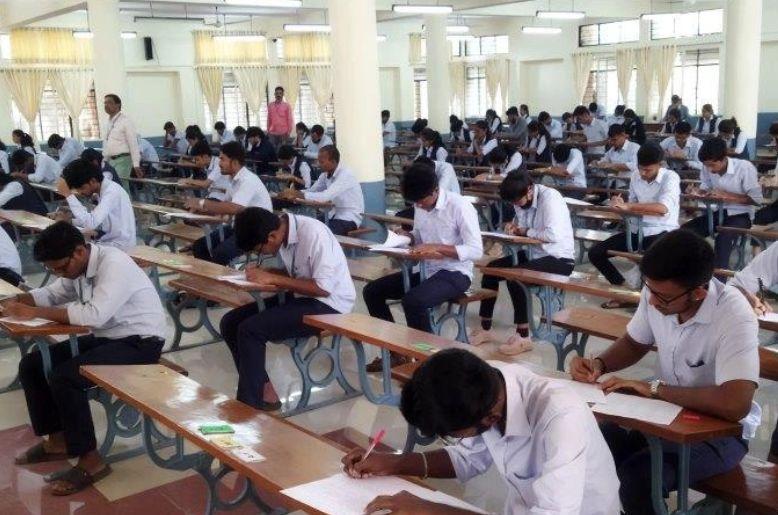
To ensure transparency in the examination system and prevent impersonation, educational boards have taken a major step by making biometric verification mandatory.
According to details, all educational boards have announced that students will be required to undergo biometric verification to appear in upcoming exams. No candidate will be allowed to enter an examination centre without completing this process.
In this regard, government and affiliated private schools and colleges have been directed to ensure the availability of biometric devices and necessary computer systems. Institutions will be required to have these facilities fully operational before student registration.
Reports indicate that more than 2.5 million students from 9th and 11th grades will have their fingerprints scanned during registration, while the Lahore Board alone will collect fingerprints from over 500,000 students in these classes.
All student registrations will be conducted online, and live scanning of both thumbs will be mandatory during the process. Educational boards have stated that no registration will be accepted without live biometric verification.
Authorities have clarified that the responsibility for providing biometric devices and computer systems will lie entirely with the heads of the respective educational institutions.
The boards emphasised that the purpose of this initiative is to bring transparency to the examination system, eliminate cheating and impersonation, and ensure merit.
New grading system replaces traditional marks in Sindh schools
In another development, the Sindh government has officially abolished the traditional marks based system in all educational boards of the province and it has introduced a new grading system in matriculation and intermediate examinations.
The decision, made by Sindh Minister for Universities Ismail Rahoo, is in line with policy guidelines as issued by the Inter Board Coordination Commission (IBCC).
Under the new policy, students who have scores less than 40 per cent will be considered failed. The minister explained that the decades old marks system has been replaced with an internationally recognised grading system to ensure uniformity in examination results across the country.
The implementation of the policy is to be made in phases in the province of Sindh.
The new grading system will be implemented in 2026 for first-year examinations of Classes 9 (SSC-I) and 11 (HSSC-I) and in 2027, will be extended to Classes 10 (SSC-II) and 12 (HSSC-II) annual examinations.
Also read: New grading system replaces traditional marks in Sindh schools