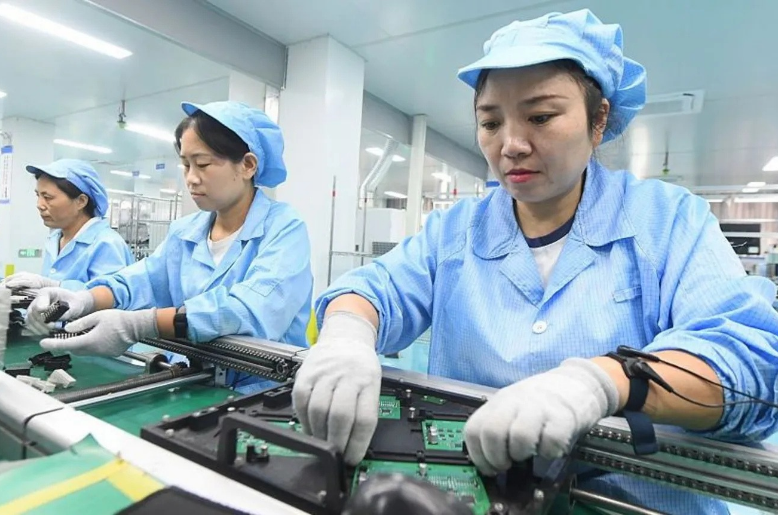
China’s economy grew faster in the third quarter of 2026. Rising global demand for artificial intelligence (AI) technology helped boost exports and support economic growth. However, weak consumer spending and problems in the property market continue to challenge the country’s recovery. The world’s second-largest economy expanded by 4.5% between July and September.
This was higher than the 4.3% growth recorded in the previous quarter. However, growth remained below the 5% expansion recorded during the first quarter of the year. The latest figures show how China’s technology industry is helping support its economy. Demand for computer chips and other equipment used in AI data centres has increased. These exports have helped offset weaker spending inside China.
AI Boom supports China’s export growth
The global AI boom has created new opportunities for Chinese manufacturers. Technology companies need advanced chips, computing equipment, and electronic components to build AI infrastructure. Chinese factories are benefiting from this demand. Exports have become an important source of economic growth. Strong overseas sales are helping manufacturers maintain production despite challenges in the domestic market. This trend has also supported China’s industrial sector.
China’s growth accelerates as AI boom helps boost exports, highlighting the growing connection between artificial intelligence and international trade. However, the country’s economic performance still depends on several factors beyond technology demand. The strength of AI-related exports also raises questions about future growth. Companies worldwide are investing heavily in AI infrastructure. Any slowdown in these investments could affect demand for Chinese technology products.
China’s Economic challenges continue
Despite stronger exports, China’s domestic economy remains under pressure. Many households continue to limit spending because of financial uncertainty. Weak wage growth and high youth unemployment have also affected consumer confidence. The property market remains another major concern. Years of excessive borrowing and overbuilding have left the sector struggling. Falling investment in property has added pressure to the wider economy. Official figures showed that property investment fell by more than 20% during the first nine months of 2026 compared with the same period last year.
This decline highlights the difficulties facing China’s economic recovery. To support growth, Chinese authorities introduced several economic measures. These included lower interest rates for some businesses and subsidies for property buyers. The government hopes these steps will encourage investment and improve confidence. However, stronger exports alone may not solve China’s economic problems. A lasting recovery will also require stronger domestic demand and more stable household spending.
Trade tensions add to economic uncertainty
China’s rising exports have also created concerns among major trading partners. The United States and the European Union have raised concerns about competition from Chinese manufacturers. Some Western industries argue that large quantities of lower-priced Chinese goods make competition more difficult. These concerns could lead to further trade restrictions or disagreements. The export boom has helped China maintain economic growth despite domestic weakness. However, growing trade tensions could create additional challenges for manufacturers and exporters.
Another uncertainty involves global investment in artificial intelligence. Companies are spending billions on data centres and computing infrastructure. If these investments fail to deliver expected returns, demand for related products could weaken. This risk means China’s export performance may depend partly on how quickly AI investment continues to grow. Manufacturers may need to adjust if international demand changes.
Outlook for China’s economic growth
China’s latest growth figures show the importance of technology exports to its economy. Strong global demand for AI-related products has helped support industrial activity and offset some domestic weaknesses. However, the country still faces significant challenges. Weak consumer spending, a struggling property market, and trade disputes could limit future progress. China’s growth accelerates as AI boom helps boost exports, but the long-term outlook remains uncertain. The government must balance export-led growth with stronger domestic consumption.
The coming months will show whether AI demand can continue supporting China’s economy. A more balanced recovery will depend on both international trade and improved conditions for households and businesses.
China Confirms First AI Talks with U.S. as Trade Truce Hints Emerge.