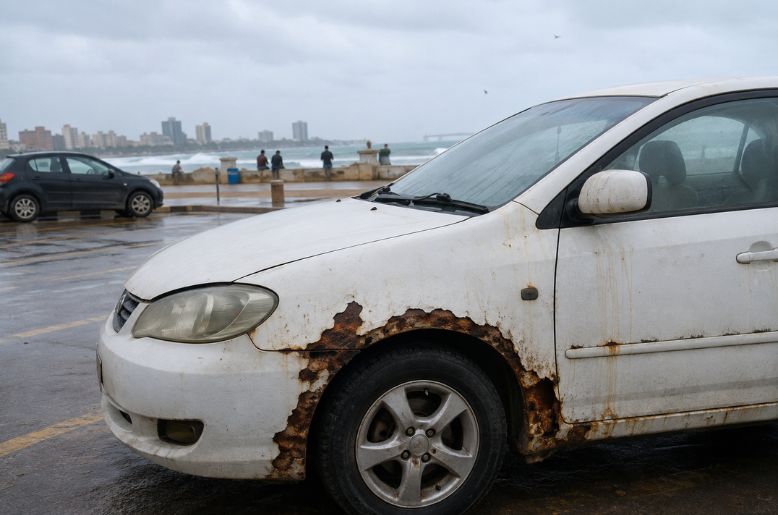
Karachi’s pleasant sea breeze may offer relief from the heat, but salty coastal air can quietly cause serious damage to vehicles over time.
Salt, humidity and trapped moisture can accelerate corrosion across a car’s body, undercarriage, suspension components, brake lines, exhaust system and electrical connections. The risk is particularly high for vehicles regularly driven or parked in coastal areas such as Clifton, DHA/Defence and Seaview.
A car may appear spotless from the outside while rust is already developing underneath. For this reason, vehicles exposed to Karachi’s coastal environment require a more careful maintenance routine than those operating in relatively dry areas.
How Karachi’s Salty Air Damages Cars
Coastal air carries tiny salt particles that settle on a vehicle’s paint, glass, rubber components and underbody. When salt combines with humidity and remains on metal surfaces, it accelerates oxidation and rust.
The problem can become worse when a car is parked outdoors overnight, frequently driven near the sea or washed improperly and left damp.
Areas particularly vulnerable to corrosion include:
- Wheel arches
- Lower door panels
- Rocker panels
- Boot floor
- Spare-wheel well
- Underbody frame
- Suspension mounts
- Brake lines
- Fuel lines
- Exhaust joints
- Battery terminals
- Exposed nuts, bolts and brackets
Rust often begins in areas that are difficult to see, particularly underneath the vehicle, around suspension mounting points and along brake lines.
Early Signs of Coastal Corrosion
Car owners should inspect their vehicles in daylight, paying particular attention to the lower body where salt, dirt and moisture tend to accumulate.
Warning signs include:
- Small bubbles beneath the paint
- Brown spots around door edges and wheel arches
- Rough or chalky paint
- Rust marks around number plates and badges
- Flaking metal underneath the vehicle
- Rusting or damaged exhaust components
- Corroded brake lines
- White powder around battery terminals
- Dampness in the boot or spare-wheel compartment
Paint bubbles should not be ignored. Once corrosion develops beneath the paint, it can spread quickly unless the affected area is cleaned, treated and properly protected.
Wash Your Car the Right Way
For Karachi’s coastal environment, washing is about more than keeping the vehicle looking clean. The main objective is to remove accumulated salt and dirt without leaving moisture trapped in hidden areas.
Experts recommend:
- Rinsing the lower body and wheel wells with fresh water once or twice a week if you live near the coast.
- Paying particular attention to wheel wells, bumpers, lower doors and underbody edges.
- Avoiding harsh detergents that can strip protective wax and dry rubber components.
- Drying the vehicle properly after washing.
- Cleaning door edges, mirrors, boot channels and fuel-lid areas.
- Removing mud and sand from underneath the vehicle after coastal drives.
High-pressure water can be useful for cleaning the underbody, but it should not be directed aggressively at electrical connectors, sensors or sensitive electronic components.
Protect Paint With Wax and Sealants
Karachi vehicles face a combination of salt, humidity, sunlight and dust, making paint protection particularly important.
Wax and paint sealants create an additional protective layer that helps prevent contaminants from directly attacking the paint. They also make it easier to remove dirt and salt during washing.
For coastal vehicles, owners should:
- Wax the car every two to three months.
- Pay attention to the roof, bonnet, boot and lower panels.
- Protect door edges and wheel arches.
- Repair paint chips as soon as possible.
- Consider a quality paint sealant or ceramic coating for longer-term protection.
- Remove bird droppings, sea spray and mud instead of allowing them to remain on the paint for days.
A small paint chip can become a rust problem much faster in a coastal environment, making timely touch-up repairs worthwhile.
Don’t Ignore the Undercarriage
The underbody is one of the most important areas to inspect because corrosion here can become expensive before it becomes visible.
Ask a mechanic to inspect:
- Suspension mounts
- Control arms
- Brake lines
- Fuel lines
- Exhaust pipes and silencer
- Floor pan
- Jack points
- Spare-wheel well
- Underbody coating
If the underbody coating is cracked, peeling or missing, it should be inspected before applying a new layer. Covering active rust with a cheap coating can trap moisture and potentially worsen the problem.
Karachi Car Maintenance Checklist
Weekly
- Rinse the lower body and wheel wells with fresh water.
- Remove mud and salt from bumpers and side skirts.
- Dry door edges, mirrors and boot channels.
- Check for new paint chips or rust spots.
Monthly
- Inspect wheel arches, door bottoms and rocker panels.
- Check battery terminals for white corrosion.
- Inspect rubber seals around doors, the boot and bonnet.
- Check the spare-wheel well for dampness.
- Reapply wax or a suitable paint-protection product when necessary.
Every Six Months
- Have the underbody inspected on a lift.
- Check brake and fuel lines.
- Inspect suspension mounts and bolts.
- Examine the exhaust system for corrosion.
- Check the condition of the underbody coating.
- Inspect exposed engine-bay wiring and metal brackets.
Regular inspections can prevent small corrosion problems from turning into costly repairs.
Parking Habits Also Matter
Where a vehicle is parked can significantly affect how quickly corrosion develops.
Whenever possible:
- Park in a shaded but well-ventilated area.
- Avoid prolonged exposure to direct coastal winds.
- Keep the car away from leaking air-conditioner drains.
- Avoid consistently damp basement parking.
- Do not use plastic covers that trap moisture.
- Use a breathable car cover if the vehicle must remain outdoors.
A car cover can protect the paint from dust and sunlight, but a non-breathable cover placed over a damp vehicle can retain moisture and encourage corrosion.
Basic Car-Care Products Can Help
Karachi drivers do not necessarily need expensive products to protect their vehicles. A consistent maintenance routine combined with a few basic supplies can make a significant difference.
Useful items include:
- Quality car shampoo
- Spray wax or quick detailer
- Microfiber towels
- Tyre and rubber-care products
- All-purpose cleaner for wheel wells and dirty lower panels
A suitable all-purpose cleaner can help remove dirt, grease and salt buildup from areas such as wheel wells and engine-bay edges. However, sensitive electrical components should never be sprayed directly.
Ultimately, proper washing, drying and regular inspection are more important than relying on any single car-care product.
Don’t Forget the Engine Bay, Brakes and Electrical Components
Coastal corrosion is not limited to a vehicle’s body.
Salt and moisture can affect battery terminals, electrical connectors, exposed brackets, metal pipes, brake components and suspension parts.
Regularly inspect:
- Battery terminals
- Fuse-box area
- Exposed wiring connectors
- Radiator brackets
- Brake-fluid lines
- Coolant pipes and clamps
- Suspension bolts
- Engine mounts
Aggressive pressure-washing of the engine bay should also be avoided, as water can enter sensors, electrical connectors and other sensitive components.
Buying a Used Car From Karachi’s Coastal Areas?
A vehicle advertised as having a “clean body” or being “non-accidental” may still have hidden corrosion.
Cars regularly exposed to the coastal environment can have attractive paintwork while developing rust underneath the body. A basic roadside inspection may not reveal corrosion around the floor, suspension mounts, brake lines or other vulnerable areas.
Before purchasing a used car from areas such as Clifton, DHA/Defence or Seaview, inspect:
- Underbody for rust
- Boot floor and spare-wheel well
- Door bottoms
- Wheel arches
- Suspension mounts
- Brake lines
- Fuel lines
- Fresh underbody coating that could be hiding rust
- Signs of water damage or dampness inside the cabin
A recently cleaned engine bay, fresh underbody coating or strong fragrance inside the cabin should not replace a proper inspection.
Also read: BYD announces limited-time offer on all vehicles across Pakistan
