
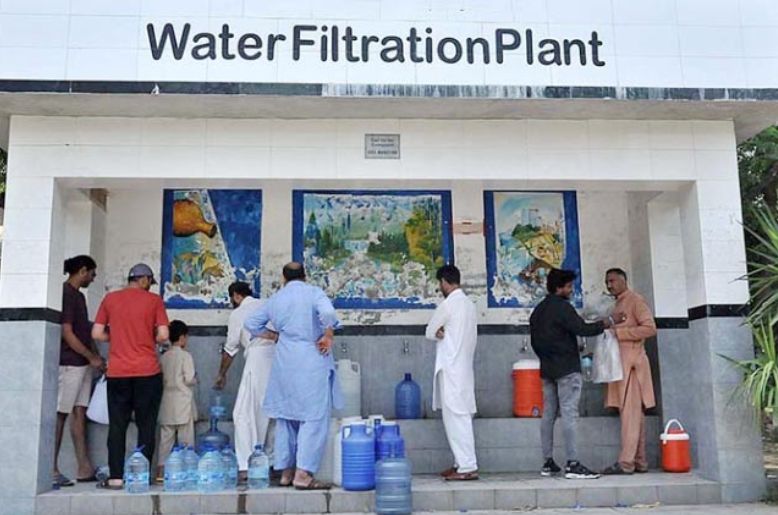
Punjab Chief Minister Maryam Nawaz Sharif has set a target to complete 5,734 water filtration plants across the province by June 2027. The target was announced during a special meeting of the Clean Water Authority chaired by the chief minister, where officials reviewed ongoing clean drinking water initiatives and plans.
Maryam Nawaz assigned the monitoring of water filtration plants to the respective assistant commissioners. Public committees will also be formed under their supervision to oversee the plants located in different neighbourhoods.
The meeting decided to establish mobile maintenance units in every tehsil to ensure the timely repair and restoration of filtration plants. These units will be equipped with mobile workshops and staffed by plumbers and other technical personnel.
The chief minister also approved the Last Mile Water Supply Project to provide drinking water to severely affected areas of Chakwal, Rajanpur and Rawalpindi. The project will prioritise water supply schemes covering 256 kilometres in Chakwal and 1,780 kilometres in Rajanpur.
During the meeting, Maryam Nawaz received a detailed briefing on water bottling plants operating in four districts: Khushab, Dera Ghazi Khan, Rahim Yar Khan and Bahawalpur. The facilities have a combined daily production capacity of 10,000 bottles, each containing 19 litres of water.
According to the briefing, approximately 4.8 million people have benefited from the initiative, while more than 75,000 19-litre water bottles have been delivered directly to households.
The chief minister said access to clean drinking water was a fundamental public right and pledged to ensure its availability to every citizen.
She expressed satisfaction over the direct delivery of clean drinking water to households, describing it as a first for Punjab. She added that, following initiatives in Chakwal, Rajanpur and Rawalpindi, water supply schemes would be extended to other areas of the province.
Maryam Nawaz said the government was committed to ending the hardship faced by residents who have to travel long distances to obtain drinking water.
