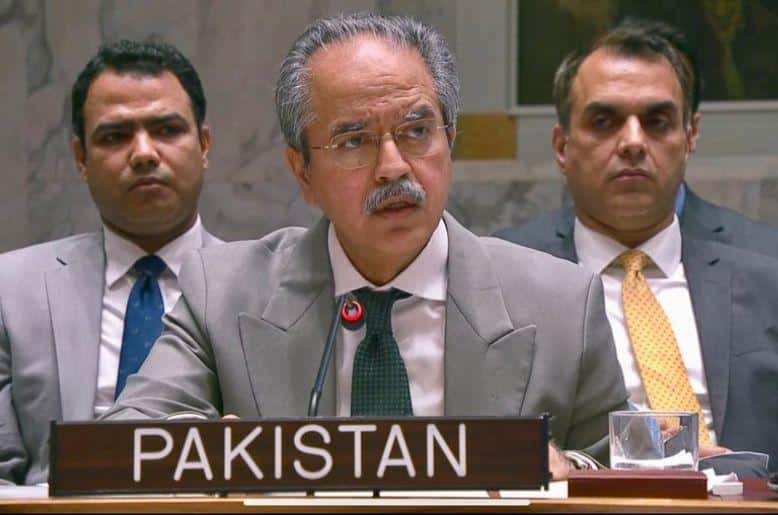
Pakistan has informed a historic session of the UNSC that the most effective means of protecting children and their right to education is to address ongoing conflicts in line with UNSC resolutions, the UN Charter, and international law.
During the council’s discussion on “Children, Technology and Education in Conflict,” chaired by US First Lady Melania Trump, Ambassador Asim Iftikhar Ahmad, Pakistan’s permanent representative to the UN, stated, “In conflict zones worldwide, including areas of foreign occupation, particularly Palestine and Jammu and Kashmir, millions of children are growing up amidst destruction and disorder, rather than in classrooms and tranquility.”
He further noted that schools have been destroyed, damaged, or militarised, teachers have been displaced, and digital networks have been disrupted.
“Education systems already fragile have been pushed to the brink of collapse,” the Pakistan envoy added at the UN.
Simultaneously, Ambassador Ahmad emphasised that while conflicts continue, we have a duty to ensure that no child’s future is erased by circumstances beyond their control.
Sindh govt strives for free education in schools
In January, the Sindh government made a significant and challenging decision for private schools throughout the province, mandating that they provide free education to at least ten percent of their total enrolled students.
It was clarified that the registration of private schools failing to comply with this order would be revoked.
Following this government decision, the registration of several private schools in the province faced threats.
The directives were anticipated to ensure that underprivileged and impoverished children had access to quality education.
Read more: Sindh govt takes major step to ensure free education in Schools