
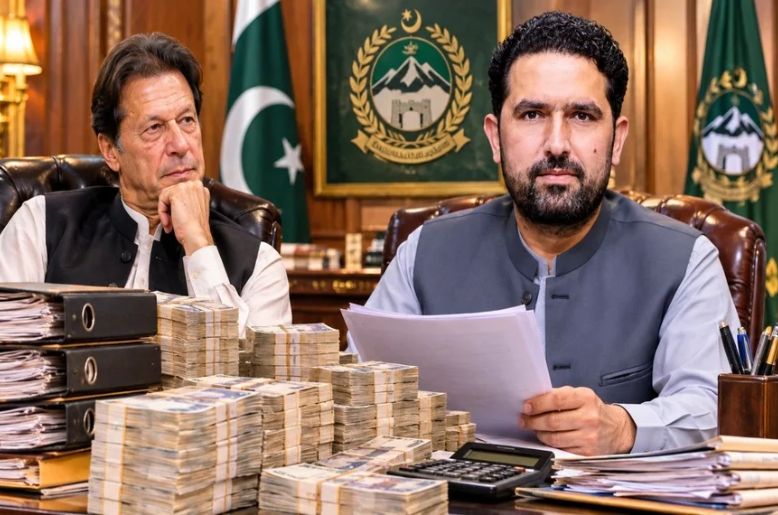
A major scandal involving financial irregularities and questionable government spending has come to light in various departments of Khyber Pakhtunkhwa during the Pakistan Tehreek-e-Insaf (PTI) government’s tenure.
According to an audit report, financial irregularities and corruption worth more than Rs3.58 billion have been identified across various provincial government departments, exposing serious weaknesses in the system of public procurement, development projects, contract approvals, financial controls and recovery of government dues.
During the first phase of the compliance audit for the financial year 2024-25, audit officials examined 14 major administrative departments out of a total of 28 Principal Accounting Officers (PAOs). The exercise reportedly uncovered evidence of non-transparent practices and serious violations of rules in contracts worth millions of rupees.
According to details of the audit report, contracts worth more than Rs1.205 billion were approved through highly questionable and non-transparent procedures. Meanwhile, favoured contractors received additional and unjustified payments exceeding Rs908.1 million for various development and construction projects.
The report also identified unauthorised expenditures exceeding Rs600 million that were incurred without proper legal approval or authority.
Furthermore, the failure to take action against contractors who openly violated contractual agreements reportedly caused the national exchequer losses of more than Rs378.5 million, including both direct and indirect financial losses.
On the other hand, audit officials confirmed that Rs117.009 million had been recovered between January and December 2025 following audit observations.
However, the financial scandal involving more than Rs3.58 billion has raised serious questions about governance, financial management and corruption within provincial government departments.
The findings have also brought the transparency and accountability of public spending under renewed scrutiny.
