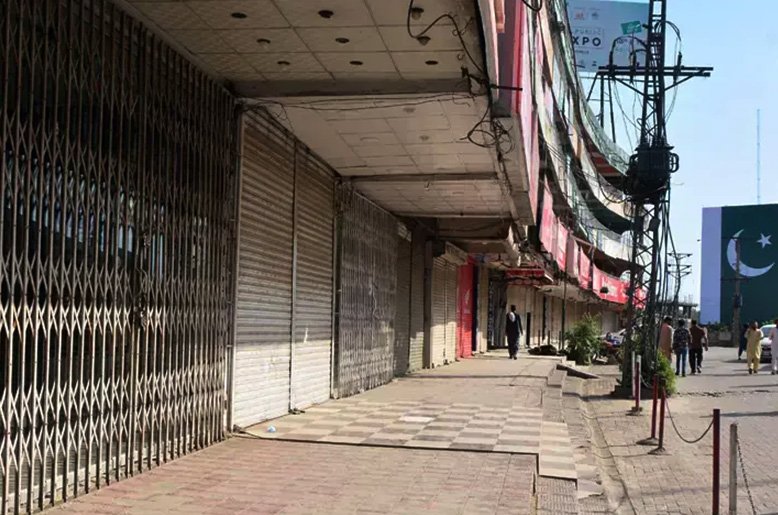
Confusion over a possible smart lockdown in Pakistan persisted on Wednesday, with no final decision announced on proposals aimed at cutting fuel consumption amid rising oil prices.
Several social media accounts and reports have claimed that the government could introduce a four-day working week by keeping Friday, Saturday and Sunday as holidays. However, the government has not officially announced any such measure.
The uncertainty followed the government’s decision to review earlier austerity measures and assess which steps could be brought back as fuel prices continue to rise.
Among the measures reportedly under consideration are reduced working days, rotational attendance for government employees, restrictions on market timings and a cut in the use of official vehicles.
However, Minister for Parliamentary Affairs Dr Tariq Fazal Chaudhry on Tuesday rejected reports that a smart lockdown was being considered.
He said the issue was neither discussed during a meeting chaired by Deputy Prime Minister Ishaq Dar nor within his knowledge. According to Chaudhry, the meeting focused on the country’s petroleum products situation.
This has added to uncertainty over whether the government plans to introduce fresh restrictions to conserve fuel.
The government had previously introduced several austerity measures during the fuel supply crisis, including reduced fuel allowances for official vehicles and partial work-from-home arrangements in the public sector. Most of those measures were later withdrawn, although market timings remained in place.
The renewed debate comes as global oil prices climb amid the conflict in the Middle East and concerns over disruptions to fuel supplies. Attacks on Saudi energy infrastructure and the closure of its East-West oil pipeline have added to supply concerns.
Pakistan has also introduced a Rs100-per-litre fuel relief scheme for motorcycles, rickshaws, Qingqi rickshaws and cars with engines of up to 800cc.
For now, the reported four-day working week and other smart lockdown measures remain proposals or media reports, rather than confirmed government policy.