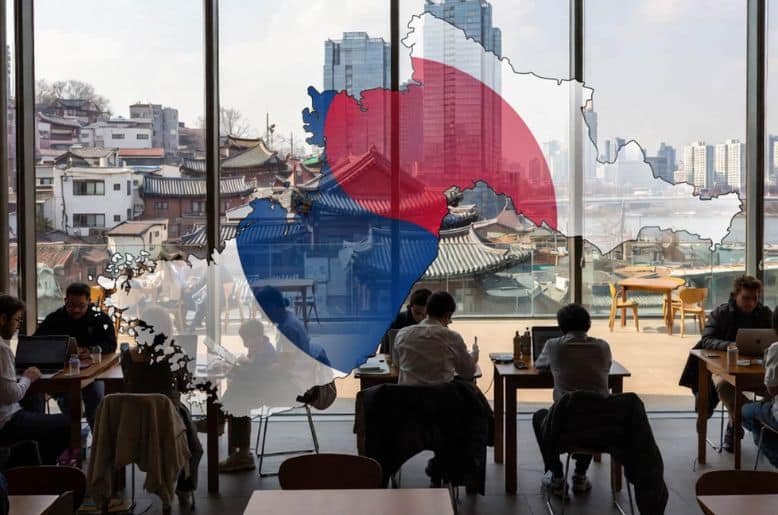
South Korea has introduced new opportunities for foreign remote workers by changing its Digital Nomad Visa, or Workcation Visa, into a permanent immigration program. The transfer will enable foreigners working from abroad and their families to stay in South Korea as long as they are employed by foreign employers or companies.
The visa was launched as a pilot scheme on January 1st, 2024, and following the positive results of over two years of implementation, it has been extended to permanent status. The new scheme extends the period that eligible applicants can remain in South Korea to three years, up from two years.
It’s for overseas nationals who work from home for overseas companies or operate a business overseas. The applicant should possess at least 1 year of professional experience and be earning at least the Government’s minimum wage.
To ensure greater access to the program, South Korea has relaxed its income criteria on younger participants and those wishing to move to rural and less densely populated areas. Such applicants can qualify with an annual income of 1X GNI per capita as compared to the earlier requirement of 2X GNI per capita.
Applicants should prepare the documents of proof of employment, proof of income, employment verification letter, police clearance certificate and private health insurance (with a minimum coverage of 100 million Korean won). Moving with family members will require proof of relationship like a marriage or birth certificate.
The program permits immediate family members, such as a legal spouse and unmarried children under age 19, to join the digital nomad making it possible for a family to move together.
Normally, applications are made via a South Korean embassy or consulate in the country of residence. Upon arrival in South Korea, successful applicants must get a residence card. In certain cases, foreigners already in South Korea on eligible visas may apply to change their immigration status to the Workcation Visa.
But visa holders are unable to work in South Korean companies. They will still have to work from home for an overseas employer or business and won’t be able to work locally unless acquiring the right immigration status.
The permanent Digital Nomad Visa is seen as South Korea’s attempt to lure high-skilled foreign talent and fill its manpower needs, as well as to boost economic development in areas that are losing population, experts say. South Korea’s program is becoming more flexible regarding eligibility criteria and the length of time that South Korea will support, and the country is becoming an increasingly appealing option for global remote workers.
Also read: Italy visa appointment for August 2026, latest update for applicants