
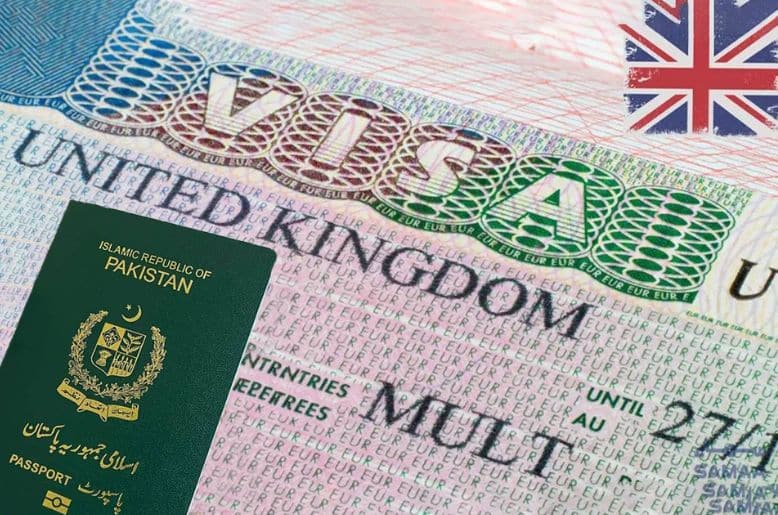
Jane Marriott, the United Kingdom (UK) High Commissioner to Pakistan, took to the social media platform X to explain in detail how Pakistanis can apply for UK visas independently without needing paid agents on Wednesday.
In her short yet detailed video message, she reassured Pakistan-based applicants and gave a step-by-step guide on what to expect with the application, when to book your appointment, and a reminder to always follow the official guidance.
The applicants can visit the official UK website https://www.gov.uk/apply-to-come-to-the-uk. Here you can see all you need to know.
How to apply for a visa to go to the UK
In order to apply for a UK visa, the applicant first needs to decide which visa they wish to apply for. A visa may be required to come to the UK to study, work, visit or join family.
The UK offers different visas depending on where the applicant comes from, why they want to visit, how long they plan to stay and the applicant’s ‘personal circumstances and skills.’ The application must be approved before the travel.
Applying for a UK visa from Pakistan? Keep calm, we've got you. And you don't need a visa agent!
— Jane Marriott (@JaneMarriottUK) June 3, 2026
Here's a step by step on what to expect with the application, when to book your appointment, and a reminder to always follow the official guidance. pic.twitter.com/mWkRj3iafw
Step 1: Which visa to apply for
If the applicant is visiting for a holiday or to see family and friends, a business trip or meeting, or to do a short course of study, they can apply for a Standard Visitor visa to visit the UK for up to 6 months.
If the individual is travelling through the UK on their way to another country, they can apply for a visa to travel through the UK.
If the applicant wishes to study in the UK, the course length, type and place of study will affect which visa to apply for.
A Standard Visitor visa will last no longer than 6 months. It will let the applicant do a short course of study.
A Short-term study visa will allow the applicant to visit the UK to study an English language course that is over 6 months and up to 11 months.
A Student visa is usually for a longer course. But, to apply for this, the person should be sponsored by a licensed college or university and have a confirmed place. On this visa, they may also be able to do some work.
A Child Student visa is for 4 to 17-year-olds who want to study at an independent school. This visa will also let the applicant do some work if they are 16 or over.
If the applicant wishes to work in the UK, there are many types of work visas.
If the applicant is a spouse, partner or family member of someone who has British citizenship or settlement in the UK, they can apply for a family visa to join them.
Read more: UK raises visa fees across multiple categories: check here
Step 2: Prepare your application
People applying for a UK visa can complete and pay for most applications online.
Each family member has to submit a separate application and pay the required fee. Applications can usually be submitted up to three months before travel for visit and work visas. And up to six months before the start of a course for student visas.
Processing times vary depending on the type of visa. In addition to this, faster decisions may be available for an extra fee.
Applicants staying in the UK for more than six months for work, study, or family reasons may also need to pay a healthcare surcharge. Some applicants must provide a tuberculosis (TB) test certificate.
People can apply on behalf of someone else with permission. Applications can be changed or cancelled by contacting UK Visas and Immigration (UKVI). Visa fees are only refunded if processing has not yet started.
Step 3: Prove your identity
UK visa applicants have to prove their identity. They will have to give documents showing they meet the visa requirements.
Applicants will have to attend an appointment at a visa application centre or use the UK Immigration: ID Check smartphone app.
If the applicant is attending a visa centre, they have to provide biometric information. Applicants have to complete identity verification within 240 days of submitting their online application.
Step 4: Getting a decision on your application
Applicants will receive a letter or email once the UK Home Office has made a decision on their visa application.
Successful applicants will usually receive an eVisa. This is a digital record of their identity and immigration status.
The visa will show the type of permission granted and its validity dates. It will also show any conditions, such as restrictions on work or access to public funds.
The applicant will receive an explanation if a visa is rejected. They will also get information on whether they can request a review or appeal the decision.
Applicants are encouraged to visit the official UK website https://www.gov.uk/ for more details and the application.

