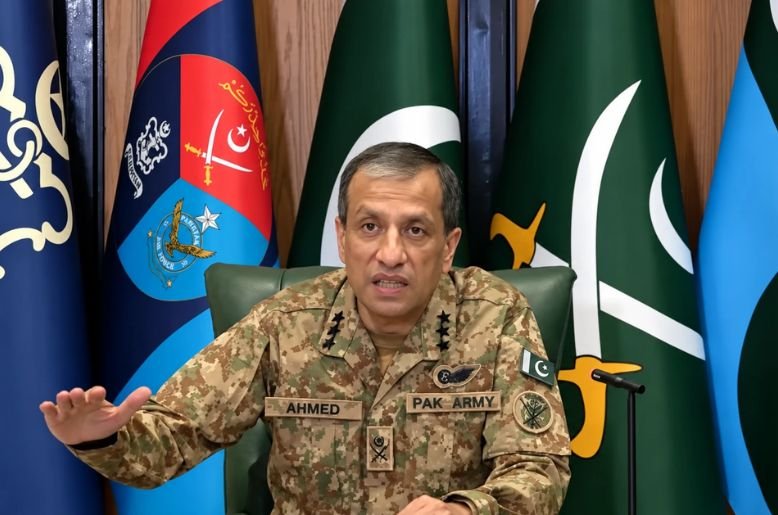
Pakistan has pledged to defend Saudi Arabia against any attack, with the Director General (DG) of the Inter Services Public Relations (ISPR), Lt. Gen. Ahmed Sharif Chaudhary, saying that Pakistan will go to any extent to defend its brotherly state, Saudi Arabia.
The DG ISPR, in an interview given to Al Arabiya News English, said that Pakistan stood with Saudi Arabia “both diplomatically and physically”.
“We will go to any extent,” he said, stressing that the commitment included protecting Islam’s two holiest sites in Makkah and Madinah.
He said that our support to Saudi Arabia is unconditional.
The comments come as Saudi Arabia faces repeated attacks by Yemen’s Houthi movement, putting pressure on the kingdom’s missile-defence capabilities.
Pakistan and Saudi Arabia signed a defence agreement in 2025 under which an armed attack on either country would be treated as an attack on both. A separate three-country arrangement involving Türkiye also provides for collective defence.
The full operational details of the agreements have not been made public.
Pakistan’s Foreign Office said last week that no military response was then under discussion under the Makkah agreement, while maintaining that Islamabad would act “when the time comes”.
Pakistan already has a significant military presence in Saudi Arabia. Asked whether Riyadh had requested additional Pakistani troops, air-defence systems or direct involvement against the Houthis, Gen Chaudhry did not confirm whether a new request had been made.
He also did not say whether Pakistan’s nuclear deterrent was covered by the defence guarantees.
Pakistan’s defence minister, Khawaja Asif, said after the bilateral pact was signed that the country’s nuclear capabilities could be made available to Saudi Arabia if required. He later told Reuters that nuclear weapons were “not on the radar” of the agreement.
Islamabad is also attempting to prevent the conflict from spreading further across the region.
Pakistan has been seeking to mediate between the United States and Iran, while also conveying a Saudi warning to Tehran over the Houthi attacks.
Pakistan’s army chief and chief of defence forces, Field Marshal Syed Asim Munir, spoke by telephone with Iranian Foreign Minister Abbas Araghchi on Wednesday while Mr Araghchi was visiting Beijing.
Iranian state media said the two discussed regional developments, but did not say whether the Houthi attacks were specifically raised.
Lt. Gen. Ahmed Sharif Chaudhary said Pakistan’s political and military leadership remained in close contact with Saudi officials and that Islamabad was consulting governments across the region in an effort to find a “negotiated and peaceful outcome”.
Pakistan previously helped mediate talks between Washington and Tehran, culminating in the Islamabad Memorandum of Understanding in June.
The agreement established a framework for ending the conflict and addressing disputes over Iran’s nuclear programme and regional security. However, subsequent negotiations have stalled amid renewed military escalation and disagreements over implementation.
Lt. Gen. Ahmed Sharif Chaudhary described the memorandum as a “consensus document” that Pakistan believed offered a pathway out of the crisis.
The host asked him when Washington and Tehran might return to negotiations; he gave no timetable, saying Islamabad would continue looking for common ground despite what he described as mistrust and “spoilers” and “detractors”.
