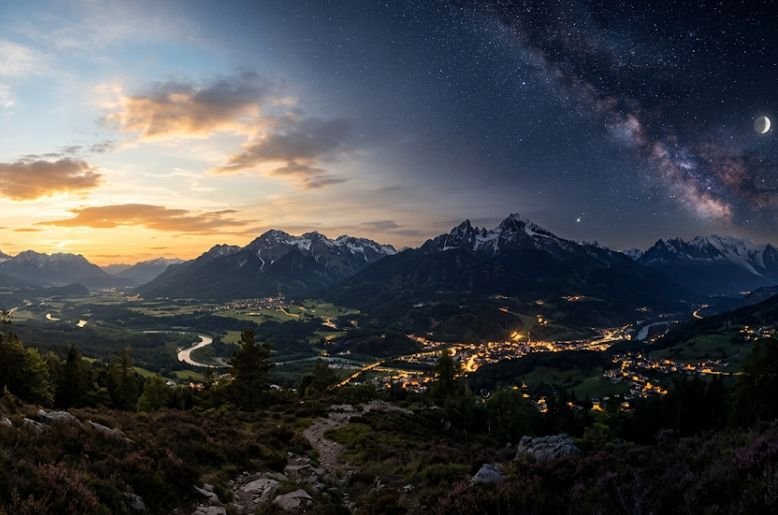
As the end of September approaches, the autumn season begins in the Northern Hemisphere, while the spring season begins in the Southern Hemisphere. With this change, an important astronomical event also occurs, known as the Autumnal Equinox or “September Equinox”.
Every year, this astronomical event generally occurs between September 21 and 24. This year, the Autumnal Equinox will begin on September 23. The Autumnal Equinox occurs when the Sun, moving from the Northern Hemisphere towards the Southern Hemisphere, comes directly above the equator.
On this occasion, in most parts of the world, including Pakistan, the duration of day and night becomes almost equal, with both lasting approximately 12 hours each. The equator is an imaginary line passing through the middle of the Earth that divides the Earth into the Northern and Southern Hemispheres.
An interesting feature of the Autumnal Equinox is that the Sun rises almost exactly in the east and sets almost exactly in the west. Before this event, the Sun rises in the northeast direction, while after the Autumnal Equinox, its rising point gradually begins to shift towards the southeast.
How does the tilt of the Earth change the seasons?
The Earth is tilted at a particular angle as it revolves around the Sun in its orbit. Because of this tilt, sunlight falls on different parts of the Earth at different angles at different times of the year, resulting in changes in seasons. During the Autumnal Equinox, the Sun is above the equator, so both hemispheres of the Earth receive almost equal amounts of sunlight.
Day and night are also almost equal in March
A similar situation occurs in March regarding the duration of day and night, when the Vernal Equinox or Spring Equinox occurs. At that time, the Sun moves from the Southern Hemisphere towards the Northern Hemisphere and crosses the equator.
In addition, the Cancer or Summer Solstice occurs in June, while the Capricorn or Winter Solstice occurs in December. June has the longest day of the year, while December has the shortest day. After both these occasions, the duration of day and night continues to gradually change.
What will happen after September 23?
After the Autumnal Equinox on September 23, the duration of the day in the Northern Hemisphere will gradually decrease, while nights will begin to become longer. In contrast, days will become longer and nights shorter in the Southern Hemisphere. Along with this astronomical change, the autumn season begins in the Northern Hemisphere and spring begins in the Southern Hemisphere.
Interestingly, the term Equinox is associated with day and night being approximately equal. However, due to the scattering of light in the atmosphere and the definitions of sunrise and sunset, day and night are not exactly 12 hours each at every location.