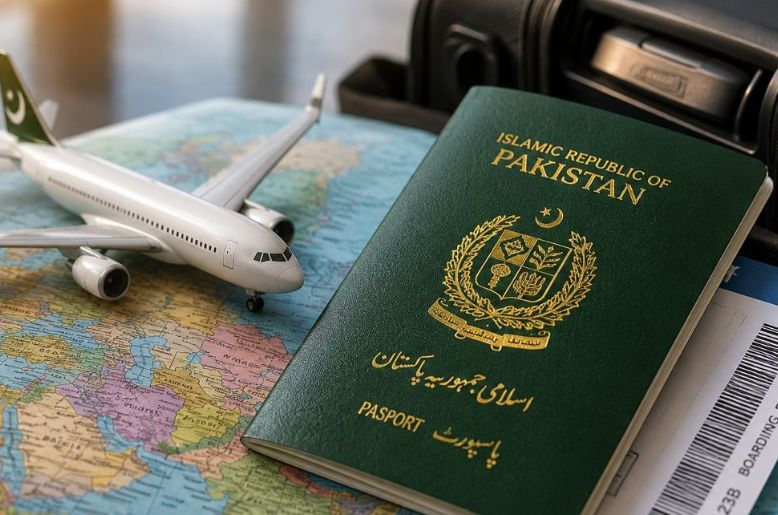
Pakistan has stopped issuing machine-readable passports (MRPs) from October 15, 2026, and will now issue only electronic passports (e-passports), the Directorate General of Immigration and Passports (DGI&P) has announced.
The Consulate General of Pakistan in New York issued a public notice confirming the change. October 14 was the last day to apply for a machine-readable passport. From October 15, passport offices in Pakistan and Pakistani diplomatic missions abroad will issue e-passports to applicants.
Existing passports remain valid
The government has clarified that existing machine-readable passports will remain valid until their expiry dates. However, passport offices will not renew them in the same format after expiry. Holders will need to apply for e-passports instead.
What is an e-passport?
An e-passport contains an electronic chip that stores the holder’s personal information and biometric data, including facial identification details. It follows standards set by the International Civil Aviation Organization (ICAO) and offers stronger security against passport fraud and forgery.
The technology also allows eligible travellers to use electronic immigration gates at international airports, potentially making border checks faster.
Why has Pakistan made the change?
Pakistan has gradually introduced e-passports since August 16, 2023, when it made the facility available at passport offices nationwide. The latest move follows a meeting chaired by Interior Minister Mohsin Naqvi in June 2026 to improve passport security and prevent fraud.
Temporary suspension in Oman
Meanwhile, the Embassy of Pakistan in Muscat has temporarily suspended passport services on October 15 due to technical issues linked to the transition. The embassy has announced that services are scheduled to resume on October 16, 2026.
Authorities have advised citizens to apply for e-passports at least six months before their current passports expire.
