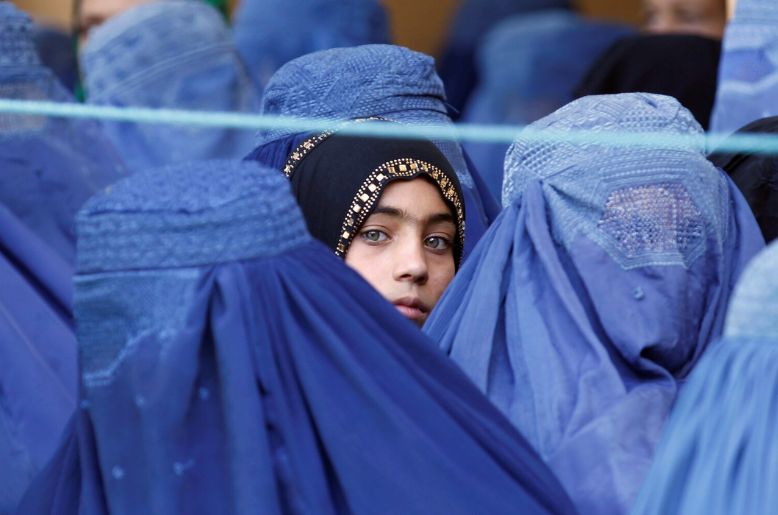
Afghanistan’s Taliban regime is facing renewed criticism over restrictions on girls’ and women’s education, amid social media claims that a permanent ban has been announced. According to figures attributed to UNESCO in August 2026, approximately 2.4 million girls in Afghanistan have been denied access to secondary education, highlighting the continuing impact of restrictions on girls’ educational opportunities.
The restrictions have drawn sustained international concern over the future of girls’ education in the country and the long-term consequences for Afghan women and society. Afghanistan remains the only country in the world where girls and women are formally barred from secondary and higher education, with millions affected by restrictions imposed by the Taliban regime since 2021.
According to UNESCO, an estimated 2.4 million girls have been denied access to secondary education, while more than 100,000 women have been prevented from attending universities, highlighting the growing scale of educational exclusion across the country.
While girls’ secondary schools and universities remain closed to female students, the Taliban has significantly expanded religious madrassas. Their number has reportedly increased from around 5,000 before 2021 to more than 23,000 by late 2025.
Taliban Supreme Leader Hibatullah Akhundzada has reiterated the importance of religious education as an obligation, but has not announced lifting restrictions on girls’ secondary and higher education. The restrictions are also expected to have severe economic and social consequences.
Projections suggest that up to 600,000 Afghan women could be excluded from the workforce, resulting in cumulative economic losses of $9.6 billion by 2066. Afghanistan is also projected to face a shortage of more than 11,000 qualified female teachers by 2030, further threatening girls’ access to education.