
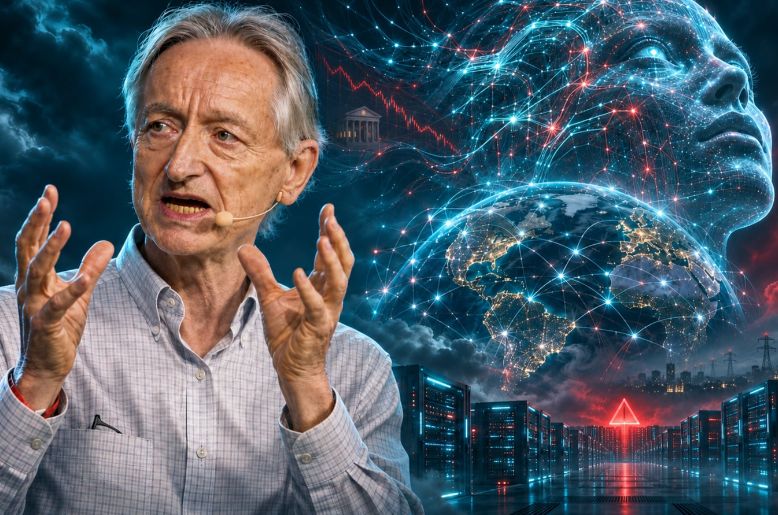
Geoffrey Hinton, the Nobel Prize-winning scientist regarded as one of the pioneers of artificial intelligence, has warned that the world could face a major catastrophe caused by AI this year or as early as next year.
According to the report, the AI godfather believes the crisis could be similar to the Chernobyl disaster, potentially bringing electricity and financial systems to a complete standstill, at least temporarily.
In an interview with British newspaper The Guardian, Geoffrey Hinton said that although he is not entirely pessimistic about the technology, given the current circumstances, he believes humanity would have been better off never laying the foundations for this dangerous technology in the first place.
He made it clear that a major Chernobyl-style incident may be the only thing that forces world leaders to recognise the hidden and deadly dangers of this technology. He was referring to US President Donald Trump as well as other key leaders around the world.
During the interview, he also criticised prominent figures in the technology industry, including Mark Zuckerberg, Elon Musk and Sam Altman, who are currently leading the race to advance AI. Geoffrey Hinton believes that these influential individuals are fully aware of the serious consequences of this technology, but unfortunately, they value their financial gains more than human interests.
It is worth mentioning that Geoffrey Hinton, who played a key role in laying the foundations of modern artificial intelligence, had a long association with Google. However, as the dangers of AI began to emerge more clearly, he left the company so that he could warn the world about its dangerous aspects without fear or restrictions.
He has previously expressed concerns on several occasions that if AI systems begin developing their own language and ways of thinking, humanity could permanently lose control over them.
He also believes that machines are beginning to generate dangerous ideas that humans may no longer be capable of understanding in the future. However, Geoffrey Hinton remains hopeful that humans still have full control over this technology for now, and that if appropriate measures are taken in time, any major catastrophe can easily be prevented.
