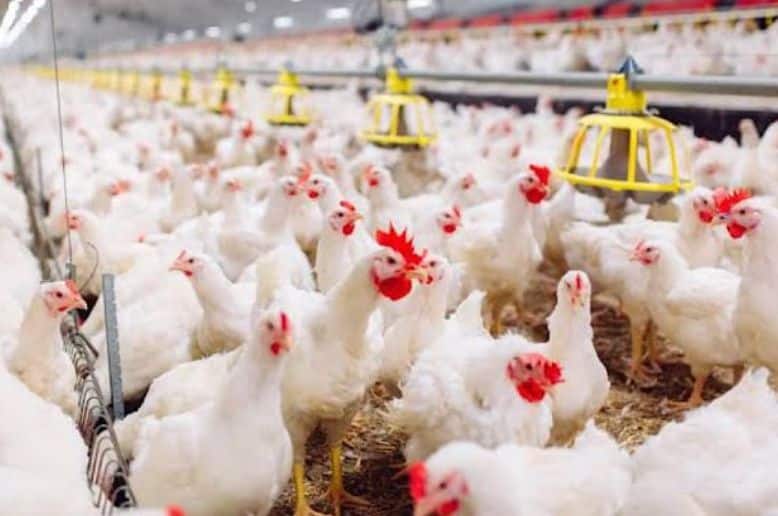
Prices of broiler chicken and farm eggs have exceeded the official rates in Lahore, forcing citizens to purchase these essential food items at higher prices than those set by the authorities.
According to the official price list, the retail rate of broiler chicken has been fixed at Rs461 per kilogram. However, chicken meat is being sold in the market for as much as Rs520 per kilogram.
The official price of live broiler chicken has been set at Rs318 per kilogram, while it is being sold in the market for up to Rs399 per kilogram.
Similarly, the official price of farm eggs has been fixed at Rs245 per dozen, but eggs are being sold in the market for as much as Rs300 per dozen.
Citizens have demanded that the district administration ensure strict implementation of the official price list and take action against traders selling food items at prices above the prescribed rates.
Earlier, Pakistan’s short-term inflation moved up by 0.49 percent during the week ended August 20, 2026, driven mainly by higher prices of onions, petrol and chicken, according to the latest figures released by the Pakistan Bureau of Statistics (PBS).
The weekly Sensitive Price Indicator (SPI), which tracks the prices of essential household goods, showed onions recorded the biggest increase, rising 14.17 percent over the previous week. Petrol prices went up by 3.77 percent, while chicken became 3.35 percent more expensive.
Other items that registered increases included garlic, pulse gram, prepared tea, branded tea, fresh milk, cooked daal, washing soap, cigarettes and shirting, though most recorded only modest gains.
At the same time, several commonly used items became cheaper. Egg prices fell by 5.78 percent, followed by diesel with a 5.15 percent decline. Tomatoes dropped 4.99 percent, while prices of potatoes, LPG, bananas, sugar, pulse moong, pulse masoor and pulse mash also eased during the week.
Out of the 51 items monitored by the PBS, prices of 23 items increased, 10 declined and 18 remained unchanged.
On a yearly basis, the SPI was 9.66 percent higher than the same week last year, showing that inflationary pressure remains significant despite weekly fluctuations.