
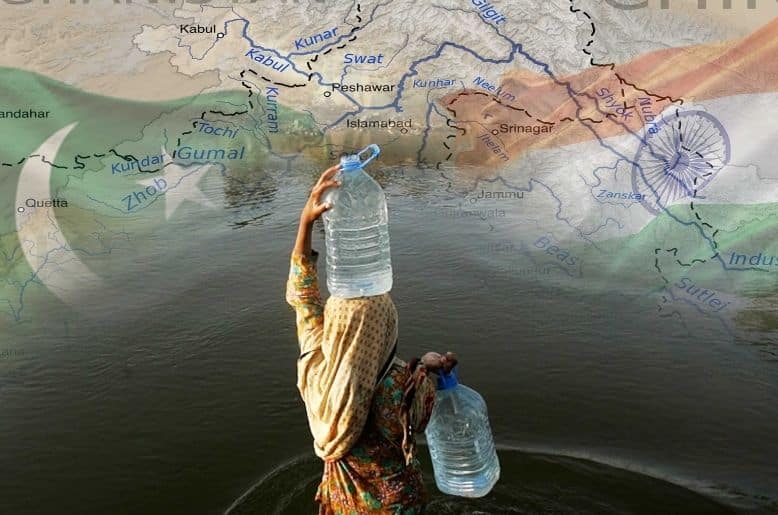
French newspaper Le Monde has warned that the suspension of the Indus Waters Treaty marks a dangerous turning point for water security in South Asia and could have consequences beyond Pakistan and India.
According to the report, India used water as a political pressure tool after the Pahalgam incident in April 2025. The newspaper stressed that neither country can suspend the Indus Waters Treaty on its own, as both sides must agree to any changes.
Le Monde said the Permanent Court of Arbitration continues to recognise the treaty as valid. The report added that India’s failure to share hydrological data has made it harder for Pakistan to issue flood warnings and manage water-related risks.
The newspaper highlighted the difficulties faced by farmers in Punjab, where sudden flooding damaged crops and left layers of sand on farmland. Families living along the Chenab River also lost livestock, crops, and household belongings.
The report said Pakistan considers any attempt to stop or divert water flows a serious provocation. It noted statements by Indian leaders that linked water to political disputes, while also mentioning Pakistan’s description of such actions as “water terrorism.”
Le Monde said Pakistan’s concerns go beyond politics and include human rights, food security, agriculture, and survival. More than 80 per cent of Pakistan’s agriculture depends on the Indus River system, making it vital to the country’s economy and millions of people.
The newspaper also pointed out that India faces its own water concerns because of upstream pressure from China and has expressed similar worries about the Brahmaputra River.
Le Monde concluded that the dispute has grown beyond a bilateral issue and now affects regional security and environmental stability. As climate change, glacier melting, and population growth increase pressure on water resources, the newspaper said cooperation between Pakistan and India has become more important than ever.
The report also stressed the need for transparent sharing of water data to protect lives and reduce risks. It warned that unilateral actions could create a dangerous precedent for international river agreements and the rights of downstream countries.
According to the newspaper, Pakistan’s position that water should not be used as a weapon, pressure tactic, or form of retaliation is receiving increasing international attention.
Also Read, FO terms India’s river diversion plan serious breach of Indus Waters Treaty

