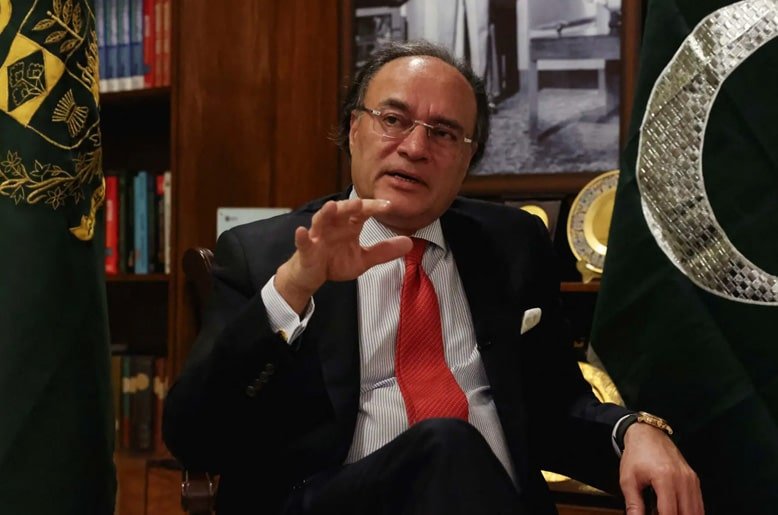
Pakistan is preparing to return to international capital markets with plans to raise between $1 billion and $2 billion this fiscal year as the government seeks to broaden its sources of foreign financing.
Finance Minister Muhammad Aurangzeb told the Financial Times that closer economic ties with the United States, including a proposed $10 billion swap arrangement, could help strengthen investor confidence ahead of the planned borrowing.
He said discussions with Washington on the proposed swap line had been constructive, with more clarity expected in the coming months. The government is also looking to the US Export-Import Bank and the US International Development Finance Corporation to help attract private investment into Pakistan.
The finance minister said Pakistan’s engagement with the US was aimed at increasing trade and investment rather than replacing its long-standing relationship with China.
The shift comes as Islamabad looks to reduce its heavy reliance on official and bilateral lenders. China remains Pakistan’s largest bilateral creditor, accounting for about 23 percent of its $129.7 billion external debt in 2024, according to World Bank data.
Pakistan has already appointed banking groups to arrange possible Eurobond, Islamic sukuk and rupee-denominated, dollar-settled bond issues. Standard Chartered and Citi are part of all three groups.
Aurangzeb said the final size and timing of a Eurobond would depend on market conditions and pricing, but the government is considering raising $1 billion to $2 billion internationally during the current financial year. Pakistan also plans to issue $750 million in panda bonds in China’s domestic market.
The planned return to global debt markets follows efforts to stabilise the economy under a $7 billion IMF programme. Pakistan has reduced its fiscal deficit, lowered inflation and rebuilt foreign exchange reserves, but economic growth remains weak.
The country’s trade deficit reached a four-year high of $39.5 billion in FY26 as exports fell. Aurangzeb said Pakistan must shift away from consumption-led growth and focus more on exports to prevent repeated balance of payments pressures.
The government is also seeking stronger credit ratings to lower borrowing costs. S&P recently upgraded Pakistan to B, while Fitch rates it B-minus with a stable outlook.
Aurangzeb said Islamabad wants to reach B-plus within a year and eventually move into the double-B category as fiscal and external conditions improve.
Read next: Oil prices retreat as producers ramp up production