
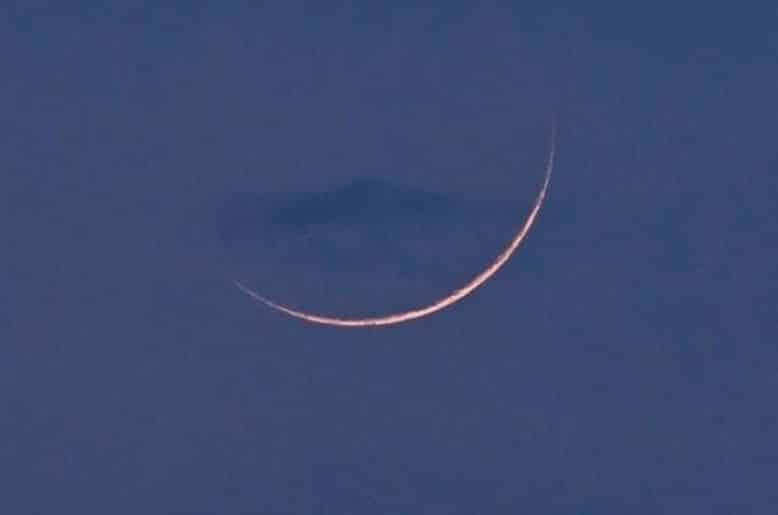
The Central Ruet-e-Hilal Committee has confirmed the sighting of the Safar al-Muzaffar moon, while the Ministry of Religious Affairs and Interfaith Harmony has issued an official notification.
According to the announcement, the crescent moon marking the beginning of Safar 1448 AH, the second month of the Islamic calendar, was sighted on Wednesday. As a result, 1 Safar 1448 AH will be observed on Thursday, July 16, 2026, across Pakistan.
The Central Ruet-e-Hilal Committee stated that the meeting of the Zonal Ruet-e-Hilal Committee Islamabad was held at the Ministry of Religious Affairs and Interfaith Harmony, Kohsar Complex, Pak Secretariat, Islamabad, under the chairmanship of Maulana Syed Muhammad Abdul Khabir Azad, Chairman of the Central Ruet-e-Hilal Committee, to review reports of the moon sighting.
Speaking after the meeting, Chairman Maulana Abdul Khabir Azad said that weather conditions were clear across most parts of Pakistan, while a few areas experienced cloudy skies. He added that credible testimonies confirming the sighting of the Safar crescent were received from several locations, including Nok Kundi and various parts of Sindh, as well as other regions of the country.
Based on these verified reports, the committee unanimously declared that 1 Safar al-Muzaffar 1448 AH will be observed on Thursday, July 16, 2026.
On the other hand, the complete solar eclipse can be seen on August 12 in different areas of the world, including Greenland, Iceland, Northern Russia, and some parts of Spain, the private media outlet reported on Monday.
According to the report of American space agencies, the complete solar eclipse can be seen before sunset in the Balearic Islands of Spain. A partial solar eclipse will be visible across various regions of the United States, southern Canada, Europe, and northwest Africa. During this event, the moon will cover only a portion of the sun, making one edge of the sun appear as if it has been cut away.
As per the Astronomers, the complete solar eclipse will occur when the moon comes between the Earth and the Sun and completely covers the Sun.
After this, the darkness appears for a few moments even in the daytime. This scene can only be witnessed in the areas that lie along the specific paths of the complete eclipse. According to the report, the annual Perseid meteor shower will light up the sky the very next day after the total solar eclipse.
Read more: When and where can complete solar eclipse be seen?
