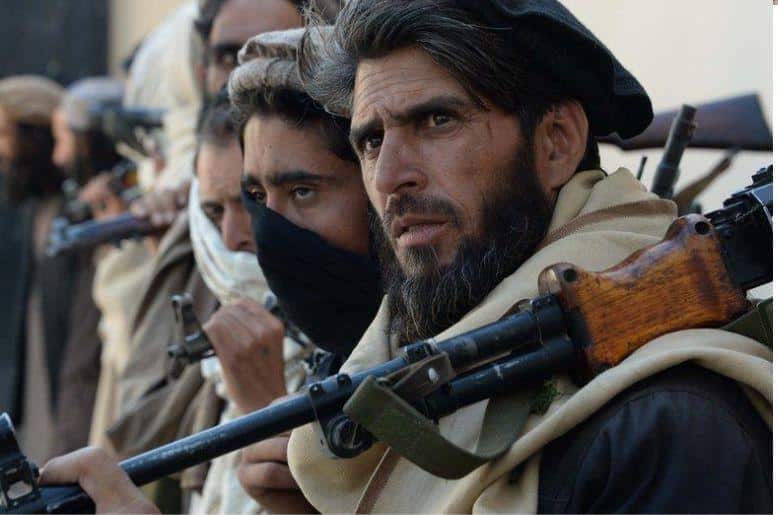
Five years after the Afghan Taliban seized power in August 2021, the world is concerned about the regime’s record on human rights, its treatment of women and girls, and the security threat posed by its terrorist groups operating from Afghan territory and carrying out attacks in Pakistan.
For Pakistan, the most serious concern remains the resurgence of the Tehreek-e-Taliban Pakistan (TTP), which has carried out increasingly frequent and deadly attacks against Pakistani security forces and civilians. A United Nations Security Council-monitoring report has warned that continued support and facilitation linked to the Afghan Taliban has contributed to the frequency and lethality of TTP attacks in Pakistan.
The report says that the terrorist group continues to benefit from support and facilitation inside Afghanistan. It also points to growing operational and facilitation links involving the TTP, Al-Qaeda and Islamic State-Khorasan (ISIL-K), adding to concerns about a broader terror ecosystem operating in the region.
For Pakistan, the consequences have been devastating, with terrorist attacks targeting security personnel, civilians, border areas and major urban centres. The continued presence of terror networks across the border has become a major source of tension between Islamabad and Kabul.
Taliban rule and the human rights crisis
The Taliban’s record inside Afghanistan has also come under intense international criticism. The regime has imposed sweeping restrictions on women and girls, including bans on secondary and higher education, employment in many sectors and access to numerous public spaces.
According to UNESCO, around 2.4 million Afghan girls are currently denied access to secondary education. The organisation has warned that the number could rise dramatically if the restrictions remain in place, depriving an entire generation of Afghan women and girls of educational and economic opportunities.
Afghan women have also faced restrictions on movement and participation in public life, while reports by international organisations have documented arbitrary arrests, media restrictions, public floggings and executions.
Natural wealth under Taliban control
The Taliban’s governance has also faced criticism over its handling of Afghanistan’s enormous mineral wealth.
A report by the Jamestown Foundation alleged that the Taliban is using control over Afghanistan’s mineral resources to consolidate political and administrative influence rather than establishing a transparent system designed to maximise benefits for the Afghan population.
Afghanistan is estimated to possess mineral resources worth more than $1 trillion, including deposits of strategically valuable minerals. Yet the country continues to face severe economic difficulties, limited government revenues and widespread humanitarian needs.
The reports has raised questions over whether Afghanistan’s natural resources are being developed for national economic recovery or used to strengthen the Taliban’s grip over the country.
India-Taliban terror nexus
Pakistan has remained one of the countries most severely affected by terrorism over the past two decades, suffering the loss of tens of thousands of lives and enormous economic damage. Pakistan have repeatedly exposed terrorism as a threat fueled by external networks and terror groups operating from across the border.
According to figures, more than 94,000 people have lost their lives, while the country has suffered economic losses exceeding $180 billion as a result of terrorism and counterterrorism operations.
The Taliban’s return to power in Afghanistan has further complicated Pakistan’s security situation. Pakistan have repeatedly said that the Tehrik-e-Taliban Pakistan (TTP) is using sanctuaries and operational space in Afghanistan to plan and carry out attacks inside Pakistan, while India provides support to groups seeking to destabilise the country.
The continued presence and activities of terror organisations on Afghan soil have raised serious concerns in Pakistan, particularly as attacks have targeted civilians, security personnel and other innocent people. Pakistan has consistently called on Afghanistan’s de facto authorities to prevent its territory from being used against Pakistan and to take effective action against militant groups.
Pakistan has also uncovered India’s use of militant proxies, including the TTP and Balochistan Liberation Army (BLA), to advance its strategic interests and undermine Pakistan’s stability. Such activities represent a broader campaign aimed at creating insecurity and disrupting economic and social development.
The victims of these attacks, however, are ordinary Pakistanis. Families have lost loved ones, communities have been devastated and security personnel have made enormous sacrifices in confronting terror attacks.
Also read: UN report exposes Taliban backing behind surge in TTP attacks in Pakistan
