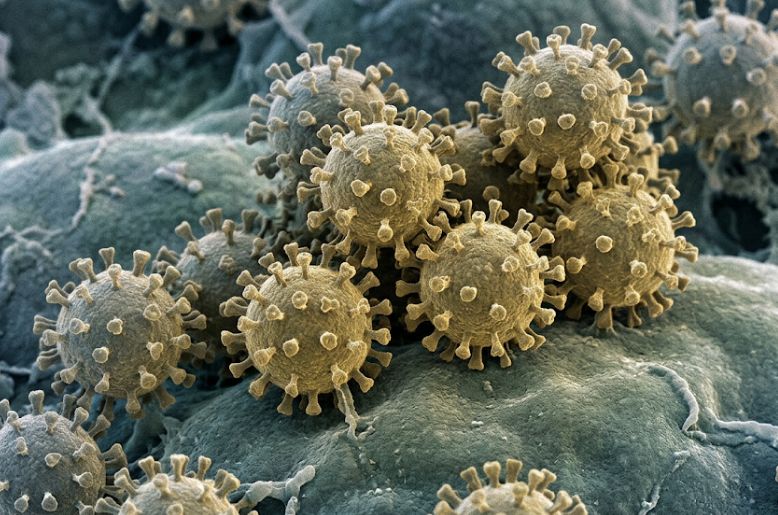
Researchers at Stanford University have applied an artificial intelligence model to millions of DNA sequences to generate new viral genomes that have been successfully activated by experiments in the laboratory.
Forbes says that scientists used an artificial intelligence model called Evo, an artificial intelligence model trained on vast amounts of data from the human genome to find common patterns and evolutionary constraints in the DNA sequences.
It is similar to the way a large language model learns patterns and relationships from a large body of text.
The researchers instructed the AI system to produce new genetic sequences from what it learned from the genomic data.
Selected sequences were then synthesized and lab experiments were conducted to see if they could give rise to working viruses.
Of the genomes synthesised with AI and tested in the lab, 16 succeeded in yielding bacteriophages (viruses that infect bacteria) that infect E. coli.
Some of the newly developed viruses also had the ability to evade the bacteria’s natural defence mechanisms against infection.
Read more: Government announces AI, IT training initiative for youth
The results indicate that AI systems can be trained to learn sufficient information about biological sequences to create working viral genomes that are not identical to natural ones.
The researchers said the work would provide insights into how generative AI could be used to study the evolution of a virus and to make biological systems.
But the findings have also stirred concerns from the biosecurity community.
If misapplied, the rapid emergence of technology enabling the creation of useful biological sequences via AI may decrease the technical hurdles for future development of harmful pathogens.
The scientists reminded that human pathogen sequences were not included in the training data for Evo.
Therefore, the viruses produced in this study were not meant to be used on humans.
The study points to the scientific opportunities for AI-enabled biology, as well as the critical need for robust safeguards, particularly as technologies evolve.
Also read: How is AI changing the study habits of Pakistani university students?