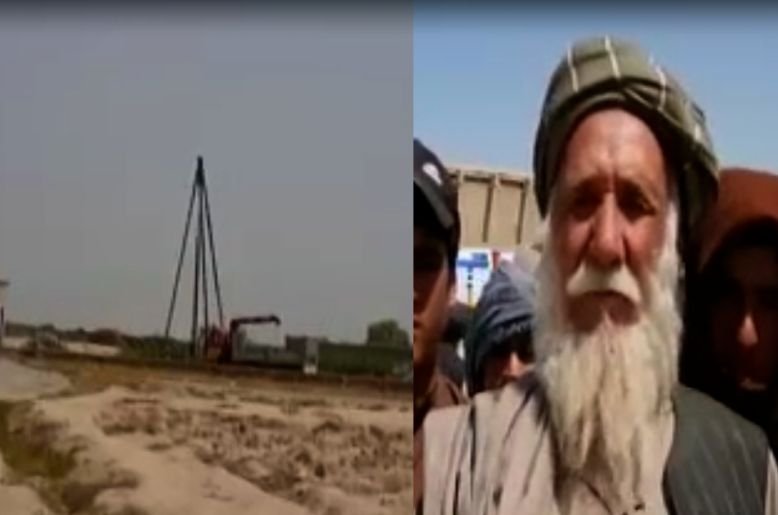
Residents of Mandisar village in Kandahar’s Daman district are facing a severe shortage of clean drinking water after underground water levels dropped by 20 to 40 metres, according to Tolo News.
The sharp decline in groundwater has disrupted daily life and severely affected agriculture in the area, leaving residents increasingly dependent on limited water sources.
Local elders, including Juma Gul and Mohammad Sadiq, said access to clean drinking water is among the community’s most urgent needs. They also highlighted the poor condition of roads in the area, which have been heavily damaged and are making transportation and access to essential services more difficult.
The elders called on authorities to take immediate measures to address the water shortage, repair damaged roads and provide support to affected communities.
Residents warned that continued depletion of underground water could further threaten agriculture and livelihoods in the district if urgent action is not taken.
On the other hand, a report by the US think tank Jamestown Foundation has exposed another case of corruption under the Afghan Taliban, revealing that the group is exploiting Afghanistan’s vast mineral resources to consolidate political control rather than directing the wealth towards the national treasury.
According to the report, Afghanistan possesses mineral resources estimated to be worth more than $1 trillion, including deposits of valuable minerals that could potentially generate significant revenue for the country.
However, the report stated that instead of developing a transparent system to manage these resources for the broader public benefit, the Taliban has used control over mineral wealth to strengthen its political and administrative influence.
The development raises further questions over the Taliban’s management of Afghanistan’s natural resources, particularly amid the country’s continuing economic challenges and limited government revenues.
The Jamestown Foundation’s latest assessment adds to criticism of the Taliban’s economic policies, uncovering that Afghanistan’s natural resources are being used not only as an economic asset but also as an instrument of political control.
Also read: Five years of Taliban regime: Repression at home, terror beyond borders
