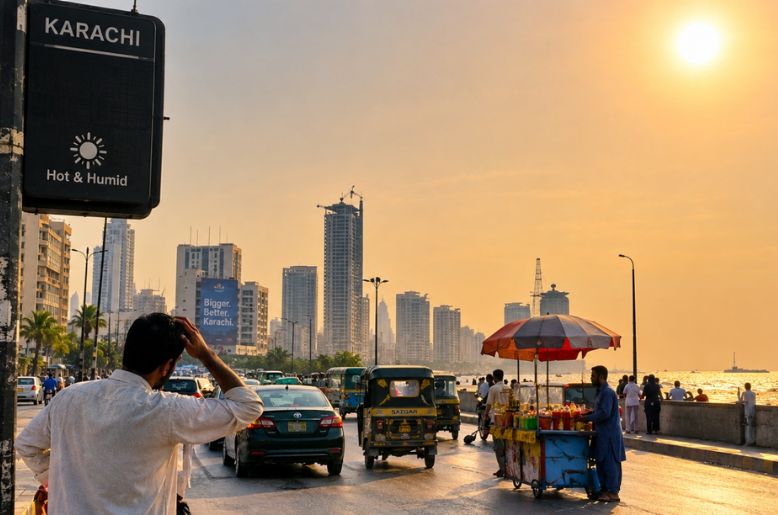
Karachi is experiencing another intense spell of hot and humid weather, with temperatures climbing above 40°C and breaking a nine-year September record.
The temperature reached 40.7°C on Monday, September 21, at the Pakistan Meteorological Department’s (PMD) weather station in Pehlwan Goth, making it the hottest September day in Karachi since 2017. The reading surpassed the previous September record of 40.5°C, set in 2017.
The city’s all-time September temperature record, however, remains 43°C, recorded on September 30, 1951.
So, why does Karachi suddenly feel so hot again, despite September usually bringing some relief from the peak summer heat?
What temperature was recorded in Karachi?
According to the PMD, Karachi’s maximum temperature reached 40.7°C on September 21.
Humidity made the conditions feel even more uncomfortable. PMD data reported by local media put humidity at around 69%, while light winds were blowing from the west at about 8 kilometres per hour. High humidity reduces the body’s ability to cool itself through evaporation, meaning the perceived temperature can be higher than the actual air temperature.
Temperatures also varied considerably across the city. Jinnah Terminal recorded 41.2°C, while Gulistan-e-Jauhar reached 41°C. Shahrah-e-Faisal recorded 39.5°C and Maripur 39°C, according to reports citing PMD observations.
Why is Karachi suddenly so hot?
Meteorologists have linked the latest heat spell primarily to changes in atmospheric circulation over the Arabian Sea and weaker or altered sea-breeze patterns.
PMD spokesperson Anjum Nazir Zaigham said temperatures had been gradually increasing after relatively moderate conditions earlier in the month. The circulation over the Arabian Sea affected wind patterns and weakened the normal southwesterly sea breeze that can help moderate Karachi’s daytime temperatures.
When the sea breeze weakens, Karachi loses one of its natural sources of cooling. Combined with strong sunshine and increasing humidity, this can make the city feel substantially hotter even when the thermometer shows a temperature in the high 30s.
Is El Niño responsible for Karachi’s heat?
El Niño is part of the broader weather picture, but it should not be presented as the sole cause of this particular hot spell.
The PMD had earlier forecast above-normal temperatures and normal-to-below-normal rainfall for much of Pakistan during the August-October period. The department also noted warming conditions in the tropical Pacific associated with developing El Niño conditions.
El Niño can influence atmospheric circulation and rainfall patterns well beyond the Pacific. In South Asia, it is generally associated with a tendency towards weaker monsoon rainfall.
For Karachi, that broader pattern has been particularly noticeable this year. The city has experienced an unusually weak monsoon, with reporting citing PMD assessments that rainfall prospects were among the weakest in nearly three decades. PMD has also linked the subdued monsoon to El Niño and a lack of significant rain-producing systems affecting the city.
Karachi’s weak monsoon is adding to the problem
The intense September heat comes after a notably dry monsoon season.
A recent assessment of Karachi’s 2026 monsoon described it as the city’s weakest in nearly 29 years. PMD had also indicated that the chances of significant rainfall in Karachi during the remaining part of the monsoon season were low.
Independent weather data shows how dry September has been so far: the climate-monitoring record lists 0mm of rainfall in Karachi during September through September 21, compared with a September normal of about 24mm.
The lack of rain does not directly cause every hot day, but prolonged dry conditions can contribute to a hotter and more uncomfortable urban environment, particularly when strong sunshine combines with weak winds.
How unusual is the current heat?
The jump has been significant.
Karachi’s maximum temperature was around the low-to-mid 30s during the first part of September, according to available daily observations, before temperatures began rising sharply. The city reached 40.2°C on September 13, 39.5°C on September 14 and eventually 40.7°C on September 21.
That 40.7°C reading was about 3°C above the September climate normal for the maximum temperature in the cited dataset.
The combination of high temperatures, humidity and weak winds explains why many residents may feel that the weather has suddenly become much hotter than the thermometer alone suggests.
Will Karachi get relief from the heat?
There is some expected relief.
The PMD forecast temperatures of around 38°C for Tuesday, with the intensity expected to ease from Wednesday and daytime temperatures potentially falling towards the mid-30s. Hot and humid conditions were still expected in the short term, however.
That means Karachi may not remain above 40°C for an extended period, but residents could continue to experience uncomfortable heat and humidity even after the maximum temperature falls.
What does the dry weather mean for Karachi?
The unusual heat is also highlighting a bigger issue for the city.
Karachi has faced a combination of weak monsoon rainfall, high temperatures and recurring pressure on its water and power systems. A dry monsoon means less rainfall entering already stressed urban and regional water systems, while prolonged hot weather can increase demand for electricity and water.
The wider national outlook is also significant. PMD’s seasonal outlook for August-October 2026 projected normal-to-below-normal rainfall over most parts of Pakistan, while temperatures were expected to remain above normal across the country.
For Karachi, therefore, the latest heat is not simply a case of summer returning in September. It is the result of a combination of atmospheric circulation, weaker sea-breeze conditions, high humidity and a much drier-than-usual monsoon season, against a broader climate pattern in which El Niño is influencing rainfall and temperature conditions.
For residents, the immediate concern remains heat exposure. Children, older people and those working outdoors are particularly vulnerable, and health authorities advise limiting unnecessary exposure to direct sunlight and maintaining adequate hydration during the hottest part of the day.
