
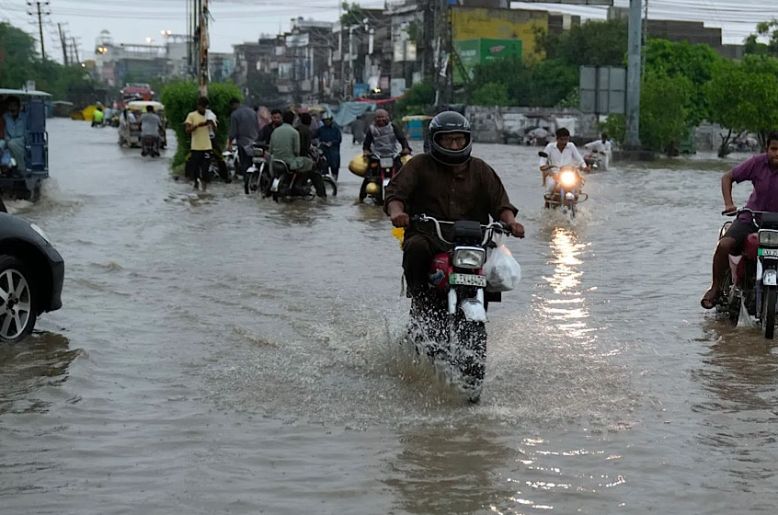
The Pakistan floods 2026 situation is worsening as heavy rain and strong winds hit several parts of the country, flooding roads and low-lying areas and raising the risk of further flooding in Punjab.
The National Disaster Management Authority (NDMA) has warned of further danger in the country’s northern areas, where rising temperatures combined with monsoon rain could trigger glacial lake outburst floods (GLOFs).
The NDMA’s National Emergencies Operation Centre has placed authorities in vulnerable areas on alert and called for close monitoring of the situation.
Islamabad, Rawalpindi face higher risk of urban flooding
Islamabad and Rawalpindi are among the areas facing an increased risk of urban flooding.
Islamabad received heavy rain overnight, accompanied by strong winds, leaving water on roads in several parts of the capital.
The rain has put additional pressure on drainage systems already strained by days of wet weather. Some roads and low-lying neighbourhoods have been affected by standing water, making travel difficult for commuters.
Rawalpindi has also experienced heavy rainfall in recent days. Several streets were flooded, and water entered homes in some low-lying areas. Vehicles were also reported to have become stranded in floodwater.
Authorities in both cities have been told to remain alert and closely monitor areas most vulnerable to flooding.
The Pakistan Meteorological Department (PMD) has forecast further rain in Islamabad, Rawalpindi, Attock, Chakwal, Jhelum and other areas.
Parts of Punjab remain at risk following days of persistent rain.
Heavy rainfall over a short period could trigger flooding in low-lying communities, along streams and in urban areas, particularly where drainage systems are already under pressure.
Authorities have been told to ensure that drainage equipment and emergency services are ready to respond if conditions worsen.
The NDMA has also warned of a rising risk of glacial lake outburst floods in parts of Gilgit-Baltistan, Khyber Pakhtunkhwa and Azad Kashmir.
Higher temperatures combined with monsoon rain can increase water levels in glacial lakes. If a lake suddenly bursts, large volumes of water can rush downstream, threatening mountain communities, roads, bridges and other infrastructure.
Several areas in Gilgit-Baltistan, including Ghizer, Hunza, Nagar, Shigar, Gilgit, Roundu, Diamer, Astore, Skardu, Ghanche and Kharmang, as well as parts of Neelum Valley, have been flagged for close monitoring.
Heavy rain has also increased the risk of flash floods and landslides in mountainous parts of Khyber Pakhtunkhwa.
Chitral, Upper Dir, Lower Dir, Swat and Shangla are among the areas facing potential risks.
Authorities warn that prolonged rainfall could loosen soil and rocks on mountain slopes, potentially blocking roads and disrupting transport.
Authorities have been told to strengthen monitoring of vulnerable areas and ensure that drainage and emergency response arrangements are in place.
Residents have been advised to avoid unnecessary travel during heavy rain and to stay away from rivers, streams, low-lying areas and roads covered by floodwater.

