
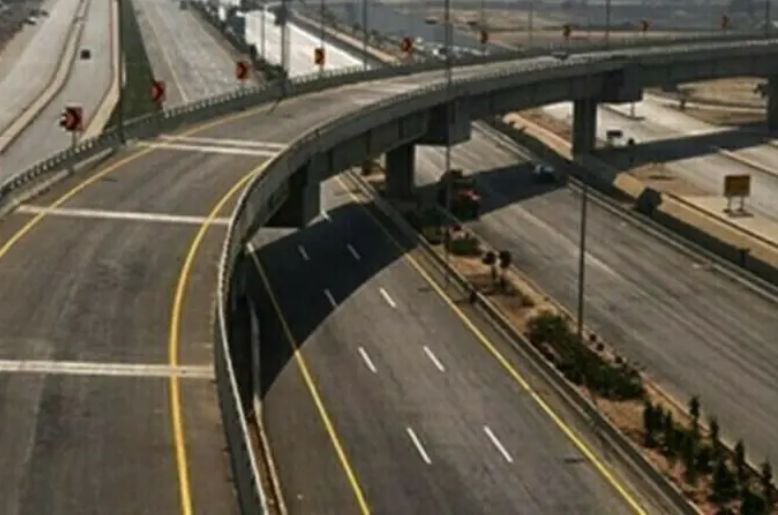
The government must distinguish between alternative or distance-shortening road projects and Pakistan’s main north-south motorway artery. Against this backdrop, the completion of the multi-billion-rupee Sukkur-Hyderabad Motorway (M-6) project should be placed at the top of the government’s infrastructure priorities.
The nearly 306-kilometre project has faced years of delays despite being a critical missing link in the Peshawar-Karachi Motorway network. The approximately 1,150-kilometre North-South Motorway corridor is a vital artery for Pakistan’s economic activity, inland trade and access to seaports. Completing the M-6 would strengthen connectivity between Karachi and the country’s major industrial, commercial and agricultural regions, while improving the movement of freight and goods along the national corridor.
The Executive Committee of the National Economic Council (ECNEC) meeting held last week approved and prioritised the Lahore-Sahiwal-Bahawalnagar Motorway and the Khwaza Khela-Bisham Expressway. Earlier, the Kharian-Rawalpindi Motorway had also been included among the country’s development priorities. These projects may have their own strategic, economic and regional importance.
However, the Sukkur-Hyderabad M-6 is not merely another road project; it is the missing link in the National Economic Corridor. Karachi is Pakistan’s main gateway to international trade. The country’s major ports handle a substantial share of its international trade, while Karachi’s economic activity is closely connected with consumers, industries, traders and businesses across the country.
At present, long-distance traffic has to rely heavily on the old and congested Sindh route along the N-5. A journey that should take only a few hours can become unpredictable, costly and painfully slow. The burden is not limited to passengers and transport operators; it translates directly into higher logistical costs for the national economy. The impact is particularly severe for perishable agricultural commodities. Every additional hour spent in transit increases the risk of spoilage and reduces the market value of agricultural produce.
At the same time, freight operators face higher costs in the form of additional fuel consumption, tyre wear, repairs, driver hours and vehicle depreciation. Delayed deliveries also increase inventory costs for businesses. Traffic congestion, meanwhile, results in excessive fuel consumption and unnecessary carbon emissions.
The construction of the M-6 would separate long-distance heavy traffic from local traffic through a controlled-access motorway. This would reduce pressure on the existing national highway, make travel times more predictable and improve the efficiency of freight movement between Karachi and the northern regions of the country. This is why the government needs to reconsider its development priorities.
The economic case for the M-6 also needs to be examined from a broader perspective. The government should not ask only, “How much will it cost to build the M-6?” It should also calculate how much economic loss Pakistan is incurring every year because the project remains incomplete. That loss includes additional fuel consumption, freight delays, higher vehicle operating costs, traffic accidents, wastage of agricultural produce, road congestion and lost trade opportunities. If all these factors are incorporated into the overall economic assessment, evaluating the M-6 solely on the basis of its construction cost would provide an incomplete picture of its true economic value.
